
In times of sadness, grief, worry, or distress, we can seek out books to help us find solace. The titles listed here are practical guides, philosophy or spiritual volumes, memoirs, or fiction titles to adult readers can turn to for comfort or relief.
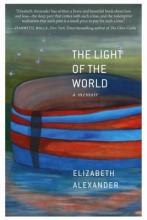
In THE LIGHT OF THE WORLD, Elizabeth Alexander--poet, mother, and wife--finds herself at an existential crossroads after the sudden death of her husband, who was just 49. Reflecting with gratitude on the exquisite beauty of her married life that was, grappling with the subsequent void, and feeling a re-energized devotion to her two teenage sons, Alexander channels her poetic sensibilities into a rich, lucid prose that describes a very personal and yet universal quest for meaning, understanding, and acceptance. She examines the journey we take in life through the lens of her own emotional and intellectual evolution, taking stock of herself at the midcentury mark. Because so much of her poetry is personal or autobiographical in nature, her transition to memoir is seamless, guided by her passionate belief in the power of language, her determination to share her voyage of self-discovery with her boys, and her embrace of the principle that the unexamined life is not worth living. This beautifully written book is for anyone who has loved and lost. It's about being strong when you want to collapse, about being grateful when someone has been stolen from you--it's discovering the truth in your life's journey: the good, the bad, and the ugly. It's Elizabeth Alexander's story but it is all of our stories because it is about discovering what matters.
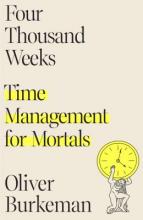
Nobody needs to be told there isn’t enough time. We’re obsessed with our lengthening to-do lists, overfilled inboxes, work-life balance, and ceaseless battle against distraction; we’re deluged with advice on becoming more productive and efficient and life hacks to optimize our days. But such techniques often end up making things worse. The sense of anxious hurry grows more intense, and still the most meaningful parts of life seem to lie just beyond the horizon. Still, we rarely make the connection between our daily struggles with time and the ultimate time management problem: the challenge of how best to use our four thousand weeks. Drawing on the insights of both ancient and contemporary philosophers, psychologists, and spiritual teachers, Oliver Burkeman delivers an entertaining, humorous, practical, and ultimately profound guide to time and time management. Rejecting the futile modern obsession with “getting everything done,” Four Thousand Weeks introduces readers to tools for constructing a meaningful life by embracing finitude, showing that many of the unhelpful ways we’ve come to think about time aren’t inescapable, unchanging truths, but choices we’ve made as individuals and as a society—and that we could do things differently.
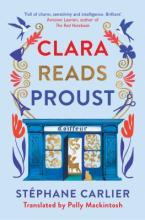
A tender and witty coming-of-age story about the power of literature to inspire new beginnings, peppered with a cast of quirky characters and a unique heroine. Clara is a hairdresser at Cindy Coiffure, a sleepy French salon with an identity crisis. Her relationship is fizzling out. Her tanoholic boss Madame Habib worships Jacques Chirac and talks longingly of her days in Paris. And now Madame Lévy-Leroyer wants to go blonde. Clara can't help but wonder if there's more to life than this... Everything changes when a customer leaves behind the first volume of In Search of Lost Time by Marcel Proust. As Clara reads, she discovers a new world. And slowly but surely, she will work out who she wants to be.
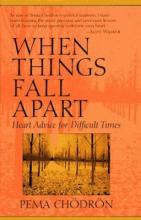
The beautiful practicality of her teaching has made Pema Chödrön one of the most beloved of contemporary American spiritual authors among Buddhists and non-Buddhists alike. A collection of talks she gave between 1987 and 1994, the book is a treasury of wisdom for going on living when we are overcome by pain and difficulties. Chödrön discusses:
• Using painful emotions to cultivate wisdom, compassion, and courage
• Communicating so as to encourage others to open up rather than shut down
• Practices for reversing habitual patterns
• Methods for working with chaotic situations
• Ways for creating effective social action
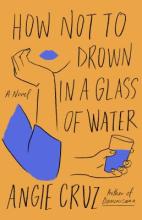
Write this down: Cara Romero wants to work. Cara Romero thought she would work at the factory of little lamps for the rest of her life. But when, in her mid-50s, she loses her job in the Great Recession, she is forced back into the job market for the first time in decades. Set up with a job counselor, Cara instead begins to narrate the story of her life. Over the course of twelve sessions, Cara recounts her tempestuous love affairs, her alternately biting and loving relationships with her neighbor Lulu and her sister Angela, her struggles with debt, gentrification and loss, and, eventually, what really happened between her and her estranged son, Fernando. As Cara confronts her darkest secrets and regrets, we see a woman buffeted by life but still full of fight. Structurally inventive and emotionally kaleidoscopic, How Not to Drown in a Glass of Water is Angie Cruz's most ambitious and moving novel yet, and Cara is a heroine for the ages.
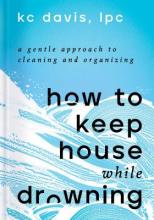
How to Keep House While Drowning will introduce you to six life-changing principles that will revolutionize the way you approach home care—without endless to-do lists. Presented in 31 daily thoughts, this compassionate guide will help you begin to get free of the shame and anxiety you feel over home care.
From Mark Doty, one of our finest poets, a delicate and sensual literary essay. Part memoir, part art history, part meditation, this hybrid volume uses the great Dutch still life paintings of the seventeenth century as a departure point for an examination of questions about our relationships with things, how we invest them with human store, how they hold feeling and hope and history within them.
A stunning collection of personal observations that uses images of the American West to probe larger concerns in lyrical, evocative prose that is a true celebration of the region.
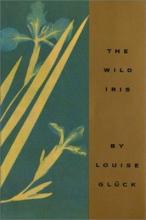
The Wild Iris was written during a ten-week period in the summer of 1991. Louise Cluck's first four collections consistently returned to the natural world, to the classical and biblical narratives that arose to explain the phenomena of this world, to provide meaning and to console. Ararat, her fifth book, offered a substitution for the received: a demotic, particularized myth of contemporary family. Now in The Wild Iris, her most important and accomplished collection to date, ecstatic imagination supplants both empiricism and tradition, creating an impassioned polyphonic exchange among the god who "disclose?s?/virtually nothing," human beings who "leave/signs of feeling/everywhere," and a garden where "whatever/returns from oblivion returns/ to find a voice." The poems of this sequence see beyond mortality, the bitter discovery on which individuality depends. "To be one thing/is to be next to nothing," Cluck challenges the reader. "Is it enough/only to look inward?" A major poet redefines her task--its thematic obsessions, its stylistic signature--with each volume. Visionary, shrewd, intuitive--and at once cyclical and apocalyptic--The Wild Iris is not a repudiation but a confirmation, an audacious feat of psychic ventriloquism, a fiercely original record of the spirit's obsession with, and awe of, earth.
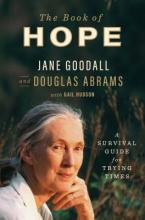
Jane Goodall and Douglas Abrams explore through intimate and thought-provoking dialogue one of the most sought after and least understood elements of human nature: hope. Drawing on decades of work that has helped expand our understanding of what it means to be human and what we all need to do to help build a better world, the book touches on vital questions, including: How do we stay hopeful when everything seems hopeless? How do we cultivate hope in our children? What is the relationship between hope and action? While discussing the experiences that shaped her discoveries and beliefs, Jane tells the story of how she became a messenger of hope, from living through World War II to her years in Gombe to realizing she had to leave the forest to travel the world in her role as an advocate for environmental justice. And for the first time, she shares her profound revelations about her next, and perhaps final, adventure.
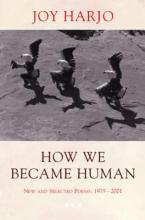
Over a quarter-century's work from the 2003 winner of the Arrell Gibson Award for Lifetime Achievement. This collection gathers poems from throughout Joy Harjo's twenty-eight-year career, beginning in 1973 in the age marked by the takeover at Wounded Knee and the rejuvenation of indigenous cultures in the world through poetry and music. How We Became Human explores its title question in poems of sustaining grace.
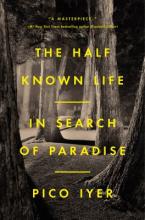
Paradise: that elusive place where the anxieties, struggles, and burdens of life fall away. Most of us dream of it, but each of us has very different ideas about where it is to be found. For some it can be enjoyed only after death; for others, it's in our midst--or just across the ocean--if only we can find eyes to see it. Traveling from Iran to North Korea, from the Dalai Lama's Himalayas to the ghostly temples of Japan, Pico Iyer brings together a lifetime of explorations to upend our ideas of utopia and ask how we might find peace in the midst of difficulty and suffering. Does religion lead us back to Eden or only into constant contention? Why do so many seeming paradises turn into warzones? And does paradise exist only in the afterworld - or can it be found in the here and now?
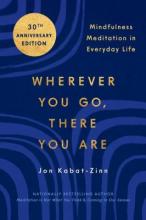
In this book, the author maps out a simple path for cultivating mindfulness in one's own life. It speaks both to those coming to meditation for the first time and to longtime practitioners, anyone who cares deeply about reclaiming the richness of his or her moments.
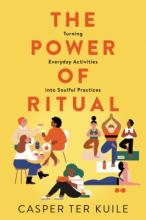
We are in crisis today. Our modern technological society has left too many of us—no matter our ages—feeling isolated and bereft of purpose. Previous frameworks for building community and finding meaning no longer support us. Yet ter Kuile reveals a hopeful new message: we might not be religious, but that doesn’t mean we are any less spiritual. Instead, we are in the midst of a paradigm shift in which we seek belonging and meaning in secular practices. In The Power of Ritual, ter Kuile invites us to deepen these ordinary practices as intentional rituals that nurture connection and wellbeing. With wisdom and endearing wit, ter Kuile’s call for ritual is ultimately a call to heal our loss of connection to ourselves, to others, and to our spiritual identities.
It is these three prayers – asking for assistance from a higher power, appreciating what we have that is good, and feeling awe at the world around us – that can get us through the day and can show us the way forward. In Help, Thanks, Wow, Lamott recounts how she came to these insights, explains what they mean to her and how they have helped, and explores how others have embraced these same ideas.
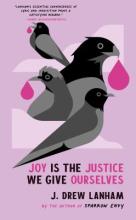
In gorgeous and timely pieces, Joy Is the Justice We Give Ourselves is a lush journey into wildness and Black being. Lanham notices nature through seasonal shifts, societal unrest, and deeply personal reflection and traces a path from bitter history to the present predicament. Drawing canny connections between the precarity of nature and the long arm of racism, the collection offers reconciliation and eco-reparation as hopeful destinations from our current climate of division. In Joy is the Justice We Give Ourselves, Lanham mines the deep connection to ancestors through the living world and tunes his unique voice toward embracing the radical act of joy.
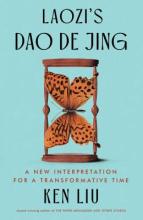
A fresh, graceful translation of one of the most important and timeless classics-the foundational work of Daoism-by award-winning novelist Ken Liu, who contextualizes and demystifies this famously enigmatic text. Laozi's Dao De Jing was written around 400 BC by a compassionate soul in a world torn by hatred and ambition, dominated by those that yearned for apocalyptic confrontations and prized ideology over experience. By speaking out against the cleverness of elites and the arrogance of the learned, Laozi upheld the wisdom of the concrete, the humble, the quotidian, the everyday individual dismissed by the great powers of the world. Earthy, playful, and defiant, Laozi's words gave solace to souls back then, and offer comfort today. Now, this beautifully designed new edition serves as both an accessible new translation of an ancient Chinese classic and a fascinating account of renowned novelist Ken Liu's transformative experience while wrestling with the classic text. Throughout this translation, Liu takes us through his own struggles to capture the meaning in Laozi's text in a series of thoughtful and provocative interstitial entries. Unlike traditional notes that purport to be objective, these entries are explicitly personal and unapologetically subjective. Gradually, as Liu learns that true wisdom cannot be pinned down in words, the notes grow sparser until they fade away entirely. His journey suggests the only way out of struggle is to engage with texts that have survived the millennia, wrestling with ideas that gesture at something eternal, in hopes that we might eventually reach that moment of transcendent joy. Liu's translation, by eschewing cleverness, paradoxically reveals the slipperiness of Laozi's original. The Dao De Jing has been translated countless times and will be translated countless times in the future. In that constant change and flow, we finally find our home in Dao, the eternal principle that allows us, finite beings in time and space, to reckon and reconcile with the infinite.
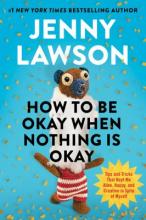
Warm, insightful, and witty, the first book of advice from New York Times-bestselling author Jenny Lawson-aka the Bloggess Jenny Lawson is full of contradictions. She's a celebrated author but battles self-doubt, paralysis, and anxiety. She's an award-winning humorist but struggles with treatment-resistant depression. The question she's most often asked by people is "How do you do it? How do you keep going even when it feels impossible? How do you keep creating?" This book is her answer. In How to Be Okay When Nothing Is Okay, Jenny shares one hundred humorous, heartfelt, and genuine tools and tricks that she relies on to keep her going even when her brain isn't working properly due to depression, anxiety, and ADHD. She also offers tips to stay passionate and focused on creative endeavors, especially when everything around you is saying to give up. With chapters like "Wash Your Brain More Than You Wash Your Bra" (sleep, you beautiful human), "Work on Easy Mode" (asking for accommodations is okay!), "Celebrate Good Times, Come On!" (make it a habit to celebrate the good things), and many more, How to Be Okay When Nothing Is Okay is a balm and companion, reminding us all that we are not alone. It's for anyone who struggles with self-doubt, guilt, motivation, and mental blocks and wants to rekindle their passion for creating. Funny, simple, empathetic, and inspirational, it will encourage you not to just survive but to find and curate joy in the face of difficult times.
In this inimitable, beloved classic—graceful, lucid and lyrical—Anne Morrow Lindbergh shares her meditations on youth and age; love and marriage; peace, solitude and contentment as she set them down during a brief vacation by the sea. Drawing inspiration from the shells on the shore, Lindbergh’s musings on the shape of a woman’s life bring new understanding to both men and women at any stage of life. A mother of five, an acclaimed writer and a pioneering aviator, Lindbergh casts an unsentimental eye on the trappings of modernity that threaten to overwhelm us: the time-saving gadgets that complicate rather than simplify, the multiple commitments that take us from our families. And by recording her thoughts during a brief escape from everyday demands, she helps readers find a space for contemplation and creativity within their own lives.
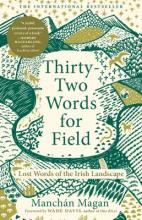
Manchán explores how Gaelic, a three-thousand-year-old lexicon has imbued the natural world with meaning and magic, evoking a time-honored way of life, from its thirty-two separate words for a field to terms like bróis (whiskey for a horseman at a wedding), iarmhaireacht (the loneliness you feel when you are the only person awake at dawn), and bladhmann (steam rising from a fermented haystack or idle boasting).
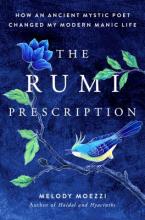
A powerful personal journey to find meaning and life lessons in the words of a wildly popular 13th century poet. Rumi's inspiring and deceptively simple poems have been called ecstatic, mystical, and devotional. To writer and activist Melody Moezzi, they became a lifeline. In The Rumi Prescription, we follow her path of discovery as she translates Rumi's works for herself - to gain wisdom and insight in the face of a creative and spiritual roadblock. With the help of her father, who is a lifelong fan of Rumi's poetry, she immerses herself in this rich body of work, and discovers a 13th-century prescription for modern life.
In House of Our Queer, activist and organizer, Bex Mui M.Ed., takes readers on a winding path through her spiritual journey. Raised Catholic with Buddhist influences from her father and his family, Bex shares the complexities that arise from being queer in religious spaces and shares her journey back to her spiritual roots after years of shutting out faith. Whether you have felt shut out by religion, or have wanted to find your own queer spiritual path, this book is for you.
Lucidly and beautifully written, Peace Is Every Step contains commentaries and meditations, personal anecdotes and stories from Nhat Hanh’s experiences as a peace activist, teacher, and community leader. It begins where the reader already is—in the kitchen, office, driving a car, walking a part—and shows how deep meditative presence is available now. Nhat Hanh provides exercises to increase our awareness of our own body and mind through conscious breathing, which can bring immediate joy and peace. Nhat Hanh also shows how to be aware of relationships with others and of the world around us, its beauty and also its pollution and injustices. The deceptively simple practices of Peace Is Every Step encourage the reader to work for peace in the world as he or she continues to work on sustaining inner peace by turning the “mindless” into the mindFUL.
To Bless the Space Between Us is a compelling blend of elegant, poetic language and spiritual insight to offer readers comfort and encouragement on their journeys through life. John O'Donohue, Irish teacher and poet, looks at life's thresholds—getting married, having children, starting a new job—and offers invaluable guidelines for making the transition from a known, familiar world into a new, unmapped territory. Most profoundly, however, O'Donohue explains "blessings" as a way of life, a lens through which the whole world is transformed. He awakens readers to timeless truths and shows the power they have to answer contemporary dilemmas and ease us through periods of change.
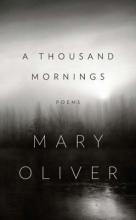
Mary Oliver returns to the imagery that has come to define her life's work, transporting us to the marshland and coastline of her beloved home, Provincetown, Massachusetts. In these pages, Oliver shares the wonder of dawn, the grace of animals, and the transformative power of attention. Whether studying the leaves of a tree or mourning her adored dog, Percy, she is ever patient in her observations and open to the teachings contained in the smallest of moments.
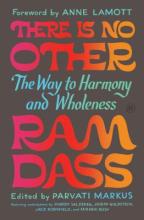
An essential balm for these tumultuous times, this thoughtful and inspiring guide features never-before-published teachings to abandon the idea there is an "other," bridging differences and cherishing the beautiful Earth that is our home, from beloved spiritual leader Ram Dass.
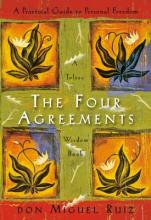
In The Four Agreements , bestselling author don Miguel Ruiz reveals the source of self-limiting beliefs that rob us of joy and create needless suffering. Based on ancient Toltec wisdom, The Four Agreements offer a powerful code of conduct that can rapidly transform our lives to a new experience of freedom, true happiness, and love.
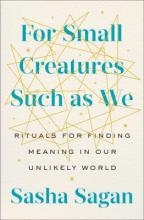
Part memoir, part guidebook, and part social history, For Small Creatures Such as We is the first book from the daughter of Carl Sagan and Ann Druyan--a luminous exploration of all Earth's marvels that require no faith in order to be believed.
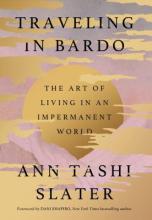
In a world where nothing lasts forever, how do we live? Life is perpetually, endlessly filled with change: new jobs and new loves, unfamiliar places and faces. And entwined in that change is loss: loss of what was or is, or what could have been. In the midst of this shifting landscape, "Traveling in Bardo" invites us to embrace impermanence in a powerful way, rooted in ancient wisdom. Interweaving explorations of bardo in relation to marriage and friendship, parents and children, work and creativity with stories of her Tibetan ancestors and the Buddhist teachings on the fleeting nature of existence, Ann Tashi Slater illuminates what the teachings have to tell us in our contemporary lives. She relays vital wisdom from Tibetan culture, giving us a bold new framework to navigate moments of change and live life fully. During over forty years of writing and speaking about her Tibetan-American heritage and the relevance of Buddhism in Western society, Slater has come to see how Tibetan bardo views on impermanence can transform the way we live. In Tibetan belief, bardo is the interval between death and rebirth, as well as the intermediate state between birth and death. It also refers to liminal periods in life when the reality we know comes to an end. A time of great possibility, it offers us the opportunity to find lasting happiness in an impermanent world.
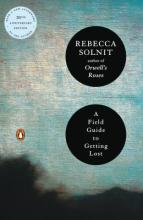
Whether she is contemplating the history of walking as a cultural and political experience over the past two hundred years (Wanderlust), or using the life of photographer Eadweard Muybridge as a lens to discuss the transformations of space and time in late nineteenth-century America (River of Shadows), Rebecca Solnit has emerged as an inventive and original writer whose mind is daring in the connections it makes. A Field Guide to Getting Lost draws on emblematic moments and relationships in Solnit's own life to explore the issues of wandering, being lost, and the uses of the unknown. The result is a distinctive, stimulating, and poignant voyage of discovery.
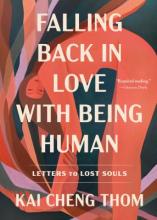
Kai Cheng Thom grew up a Chinese Canadian transgender girl in a hostile world. As an activist, psychotherapist, conflict mediator, spiritual healer, and celebrated writer, she's always pursued the same deeply personal mission: to embrace the revolutionary belief that every human being, no matter how hateful or horrible, is intrinsically sacred. But then Kai Cheng found herself in a crisis of faith, overwhelmed by the viciousness with which people treated each other, and barely clinging on to the values and ideals she'd built her life around: justice, hope, love, and healing. Rather than succumb to despair and cynicism, she gathered all her rage and grief and took one last leap of faith. Kai Cheng began writing letters to everyone she has trouble holding in her heart-those seemingly beyond saving. She wrote to dead people, exes, prositutes, johns, monsters, transphobes, and racists; to the fantasy man she still longs for, to the ones who hurt her, and to the ones who watched. In writing these love letters, Kai Cheng found herself not only rediscovering and deepening her faith in humanity, but falling back in love with being human.
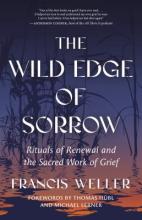
Noted psychotherapist Francis Weller provides an essential guide for navigating the deep waters of sorrow and loss in this lyrical yet practical handbook for mastering the art of grieving. Describing how Western patterns of amnesia and anesthesia affect our capacity to cope with personal and collective sorrows, Weller reveals the new vitality we may encounter when we welcome, rather than fear, the pain of loss. Through moving personal stories, poetry, and insightful reflections he leads us into the central energy of sorrow, and to the profound healing and heightened communion with each other and our planet that reside alongside it.
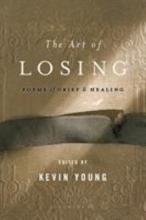
Poetry serves a unique role in our lives, distilling human experience and emotion down to truths as potent as they are brief. There are two times most people turn to for love and loss. The Art of Losing will be the first anthology of its kind, delivering poetry with a purpose. Editor Kevin Young has introduced and selected 150 devastatingly beautiful poems that embrace the pain and heartbreak of mourning. Divided into five sections (Reckoning, Remembrance, Rituals, Recovery, and Redemption), with poems by some of our most beloved poets as well as the best of the current generation of poets, The Art of Losing is the ideal a gift for a loved one in a time of need and for use by ministers, rabbis, and palliative care workers who tend to those who are experiencing loss.