
There are countless dimensions to the writing life, and almost as many books on the topic. Our staff have selected a small number of titles to help you with information about developing your practice, honing your craft, publishing your work, or any combination of these things.
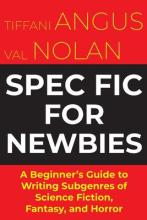
"Tiffani Angus (Ph.D.) and Val Nolan (Ph.D.) met at the 2009 Clarion Writers' Workshop in California and since then have collaborated many times as fans and scholars on panels for SFF conventions and writing retreats. Working together on this book and combining their experience as SFF writers and as university lecturers in Creative Writing and Literature made perfect sense! Every year they see new students who want to write SFF/Horror but have never tried the genres, have tried but found themselves floundering, or, worse, have been discouraged by those who tell them Science Fiction, Fantasy, and Horror are somehow not "real" literature. This book is for all those future Science Fiction, Fantasy, and Horror writers.
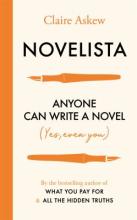
Novelista is a friendly, straight-talking writing guide for people who want to write a novel but don't know how to begin. It asks all the important questions and gives a host of reassuring answers that demonstrate that anyone can write a novel - even you! To begin with, what the hell is a novel? It's basically a tiny world, where characters are born, live, and (sometimes) die. To write one all you need is a notebook and a pen - but along the way you'll want to learn about good writing habits, planning, mastering descriptions and dialogue and how to pull it all together. This book will guide you through the process and orient you towards the goal of publication. From absolute beginner to novelista, this book will change the way you write and think about writing.
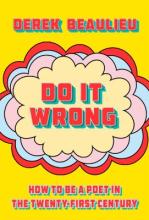
A collection of essays, ideas, and approaches to writing and teaching poetry.
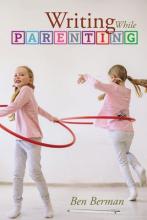
Writing while Parenting is Ben Berman's witty, brainy, soulful musings that will speak to every parent-and every writer-committed to understanding the way that having kids raises the stakes for-and loosens the reins of-how we speak and write. It is Berman's second collection of essays and fourth book.
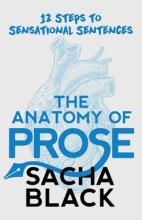
The Anatomy of Prose is a comprehensive writing guide that will help you create sensational sentences. Whether you're just starting out or are a seasoned writer, this book will power up your prose, eliminate line-level distractions and help you find the perfect balance of show and tell. By the end of this book, you'll know how to strengthen your sentences to give your story, prose and characters the extra sparkle they need to capture a reader's heart. If you like dark humor, learning through examples and want to create perfect prose, then you'll love Sacha Black's guide to crafting sensational sentences. Read The Anatomy of Prose today and start creating kick-ass stories.
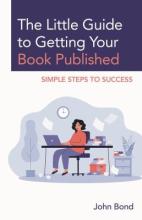
The Little Guide to Getting Your Book Published takes prospective authors from idea to draft manuscript to published book in a step-by-step process.
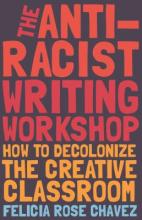
This easy-to-use guide explains how to recruit, nourish, and fortify writers of color through innovative reading, writing, workshop, critique, and assessment strategies.
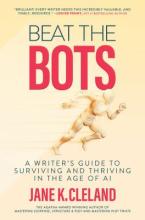
Even though artificial intelligence is based on a technology called "machine learning," computers can't learn to be creative--but you can. This book will show you the way. AI is, by definition, derivative, not creative. It can't bring rational judgment to determine the quality or value of its work. When you bring those capabilities to your writing, your stories will touch readers? hearts and minds.
Great writing doesn't begin with form--it begins with obsession. Two novelists offer an inspiring guide to transforming that obsession, using whatever genre fits best. Writers don't need formulas; they need encouragement to take risks. The Lab offers a bold, hands-on approach, urging writers to embrace uncertainty, experiment with form, and investigate what haunts them. The Lab features ten chapters and ninety exercises that challenge writers to play with fiction, memoir, and poetry--or push toward hybrid or entirely new forms. This is a book for those ready to dig deep and write fearlessly.
A smart and funny guide to writing fiction, with engaging infographics that bring storytelling techniques to life. Whether you are daunted by a blinking cursor or frustrated trying to get the people in your head onto the page, writing stories can be intimidating. It takes passion, tenacity, patience, and a knowledge of and faith in the often-digressive writing process. A do-it-yourself manual for the apprentice fiction writer, Storyville! demystifies that process; its bold graphics take you inside the writer's comfortingly chaotic mind and show you how stories are made.
How to Become a Black Writer is not only just Marita's story, but can also be the start of yours. Inside, you'll find lessons and instructions based on her experiences during the renaissance of Black literature to help you cultivate your voice. Featuring timeless knowledge that helped not only Marita, but bestselling storytellers like Nzotake Shange and Toni Morrison, you, too can make a big change in the book publishing world. Discover meaningful events and the people behind them that helped Marita Golden to become the leading icon she is today, such as: How she was mentored under feminist poet Audre Lorde. Life as a groundbreaking journalist at Essence Magazine. Co-founding and leading the Hurston-Wright Foundation to help publish Black stories.
From the literary agent behind some of today's most successful authors, comes a narrative guide geared specifically to the needs of nonfiction writers, demystifying the secrets of publishing for aspiring and working writers, as well as a practical roadmap to getting your book published. Alia Hanna Habib remembers what it was like to be on the outside of the publishing world, looking in. Arriving in New York, a first-generation college student with a love of reading and loads of ambition, she hadn't any idea how to break into the business of books. Now years later, in her career as an agent, she hears from prospective clients who, whether they're experts at the top of their fields or wholly new to the writing game, consider breaking through as a success in publishing to be a mysterious and dauting task. Ever determined to flout the stereotype of agent as gatekeeper, however, Habib is prepared to hand emerging writers the key.
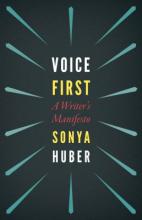
Voice First: A Writer's Manifesto offers writers and teachers of writing an opportunity to not only engage their voices but to understand and experience how developing their range of voices strengthens their writing.
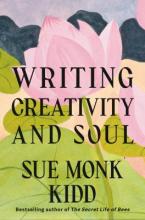
At the heart of this book is the unwavering belief that writing is a spiritual act, one that draws inspiration from the soul, that wellspring of creativity between imagination and feeling. Once you tap into that part of yourself, said Maya Angelou, there are only three more things you need as a writer: something to say, the ability to say it, and, perhaps most difficult of all, the courage to say it. Equal parts memoir, guidebook, and spiritual quest, [this book] is a pilgrimage and a touchstone, a journey into the transformational force of the imagination and the creative genius that lies in the unconscious.
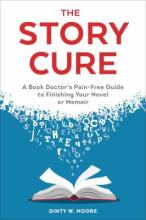
Creative writing professor Dinty W. Moore prescribes remedies for the most common stumbling blocks novelists and memoirists encounter when embarking on their writing project.
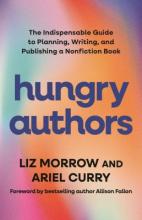
In Hungry Authors, industry insiders Liz Murrow and Ariel Curry teach aspiring nonfiction authors with important messages and great ideas how to envision, write, plan, pitch, and publish an amazing book.
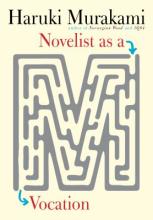
A charmingly idiosyncratic look at writing, creativity, and the author's own novels. Haruki Murakami's myriad fans will be delighted by this unique look into the mind of a master storyteller. In this engaging book, the internationally best-selling author and famously reclusive writer shares with readers what he thinks about being a novelist; his thoughts on the role of the novel in our society; his own origins as a writer; and his musings on the sparks of creativity that inspire other writers, artists, and musicians. Readers who have long wondered where the mysterious novelist gets his ideas and what inspires his strangely surreal worlds will be fascinated by this highly personal look at the craft of writing.
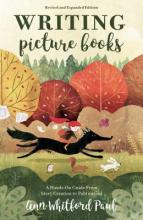
Fully updated and thoroughly revised, Writing Picture Books Revised and Expanded Edition is the go-to resource for writers crafting stories for children ages two to eight. You'll learn the unique set of skills it takes to bring your story to life by using tightly focused text and leaving room for the illustrator to be creative.
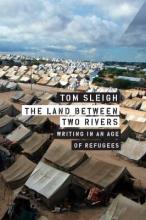
These essays recount Tom Sleigh's experiences working as a journalist during several tours in Africa and in the Middle Eastern region once called Mesopotamia, "the land between two rivers." Sleigh asks three central questions: What did I see? How could I write about it? Why did I write about it? The first essays focus on the lives of refugees in Syria, Lebanon, Jordan, Kenya, Somalia, and Iraq. Under the conditions of military occupation, famine, and war, their stories can be harrowing, even desperate. But unlike their depiction in mass media, their stories are often laced with an undeluded hopefulness. The second part of this book explores how writing might be capable of honoring the texture of these individuals' experiences while remaining faithful to political emotions, rather than political convictions. The final essays meditate on youth, restlessness, illness, and Sleigh's motivations for writing his own experiences in order to move out into the world.
Drawing from her twenty years of teaching experience and her bestselling Substack newsletter, For Dear Life, Maggie Smith breaks down creativity into ten essential elements: attention, wonder, vision, play, surprise, vulnerability, restlessness, tenacity, connection, and hope. Each element is explored through short, inspiring, and craft-focused essays, followed by generative writing prompts.
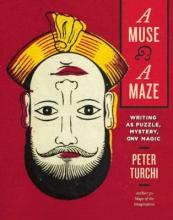
With his characteristic talent for finding connections between writing and the stuff of our lives, Peter Turchi ventures into new and even more surprising territory. In A Muse and a Maze, Turchi draws out the similarities between writing and puzzle-making and its flip-side, puzzle-solving. As he teases out how mystery lies at the heart of all storytelling, he uncovers the magic-the creation of credible illusion-that writers share with the likes of Houdini and master magicians. In Turchi's associative narrative, we learn about the history of puzzles, their obsessive quality, and that Benjamin Franklin was a devotee of an ancient precursor of sudoku called Magic Squares. Applying this rich backdrop to the requirements of writing, Turchi reveals as much about the human psyche as he does about the literary imagination and the creative process.
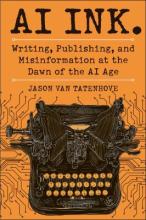
Drawing on interviews with editors, agents, educators, and innovators, [Van Tatenhove] explores *how AI is reshaping the daily work of writing and editing *the explosion of "scam books" and the fight to protect authors' rights *the ethical dilemmas of training AI on copyrighted work without consent *what durable, human skills writers must sharpen to survive and thrive in this new landscape. Both a survival story and a guidebook for the future, AI Ink argues that the only way forward is to use AI ethically--as a partner, not a replacement--while fiercely protecting what makes human voices unique. Urgent, candid, and deeply personal, AI Ink is more than a book about technology. It's about resilience, authorship, and what it means to remain human in an age when machines can mimic our every word.
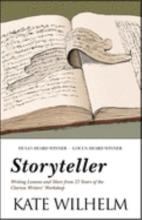
The Clarion Writing Workshop, established by author Kate Wilhelm with her husband, writer Damon Knight, is regarded as one of the finest creative incubators in the country. For the first time, Wilhelm gracefully and humorously tells the inside story of the program and includes a healthy dose of writing tips. More than a memoir or writing guide, Wilhelm discusses how the workshop began, the inside tricks of teaching writing, what she learned and how she passed a love of the written word on to generations of writers. Storyteller is a gift to all writers from this generous acclaimed writer.