
When you're in a reading slump or want to get back into reading after some time away, a short and engaging read might be just what you need! All of the books in this list are compelling, page-turning, engrossing, and under 250 pages.
What if your two favorite people hated each other with a passion? The wife has it all. A big house in a nice neighborhood, a ride-or-die snarky best friend, Temi, with whom to laugh about facile men, and a devoted husband who loves her above all else--even his distate for Temi. On a seemingly normal day, Temi comes over to spend a lazy afternoon with the wife: drinking wine, eating snacks, and laughing caustically about the husband's shortcomings. But when the husband comes home and a series of confessions are made, the wife's two confidantes are suddenly forced to jockey for their positions, throwing everyone's integrity into question--and their long-drawn-out territorial dance, carefully constructed over years, into utter chaos. Told in three taut, mesmerizing parts--the wife, the husband, the best friend--over the course of one day, The Three of Us is a subversely comical, wildly astute, and painfully compulsive triptych of domestic life that explores cultural truths, what it means to defy them, and the fine line between compromise and betrayal when it comes to ourselves and the people we're meant to love.
From her cell in a mysterious convent, a woman writes the story of her life in whatever she can find--discarded ink, dirt, and even her own blood. A lower member of the Sacred Sisterhood, deemed an unworthy, she dreams of ascending to the ranks of the Enlightened at the center of the convent and of pleasing the foreboding Superior Sister. Outside, the world is plagued by catastrophe--cities are submerged underwater, electricity and the internet are nonexistent, and bands of survivors fight and forage in a cruel, barren landscape. Inside, the narrator is controlled, punished, but safe. But when a stranger makes her way past the convent walls, joining the ranks of the unworthy, she forces the narrator to consider her long-buried past--and what she may be overlooking about the Enlightened.
As ninety-two-year-old Florence 'Flo' Greene nears the end of her life, she writes a letter to Ruthie, the woman who grew up next door to her, describing the items Flo is leaving Ruthie in her will. But as it goes on, telling surprising stories about those 'little' things Flo will leave behind (what could possibly be the worth of a rubber band kept in a matchbox tied up in red ribbon?), an unforgettable portrait of the life she has lived emerges. The letter starts off as an autobiography in things, but it turns out to do much more than that: ultimately, it will transform Flo and those around her. In the time she has left, Flo decides to take herself up on tiny dares.
In an age of miracles where our greatest heroes from history have magically, unexplainably returned to shake us out of our confusion and hate, Harriet Tubman is back, and she has a lot to say. [She] and four of the enslaved persons she led to freedom want to tell their story in a unique way: Harriet wants to create a hip-hop album and live show about her life, and she needs a songwriter to help her. She calls upon Darnell Williams, a once successful hip-hop producer who was topping the charts before being outed on a BET talk show. Darnell has no idea what to expect when he steps into the studio with Harriet, only that they have a short period of time to write a legendary album she can take on the road. Over the course of their time together, they not only create music that will take the country by storm, but confront the horrors of both their pasts and learn to find a way to a better future.
Upward Bound is not a place anyone dreams of spending their days. The dreary adult daycare center for Los Angeles's disabled community is, for many of its clients and staff, a place of last resort. This includes Carlos, a young aide who lost his mother as a boy and now works there alongside his beloved sister Delia; Jorge, the gentle nonverbal giant whom Carlos seeks to befriend (and prevent from escaping); Tom, a beautiful young man with cerebral palsy, who pines for Ann, the summer lifeguard at the center's pool who feels out of her depth; then there's Mike, Upward Bound's director who came to L.A. to pursue an acting career but now channels his passion into staging an impressive holiday show starring the center's sorely underestimated clients. Framing these interlocking narratives - and connecting them in surprising, shattering ways - is the riveting and sometimes ironic testimony of Walter, a recent community college graduate who, after a family tragedy, must return to the company of his disabled peers.

Acclaimed by critics, beloved by readers of all ages, taught everywhere from inner-city grade schools to universities across the country, and translated all over the world, The House on Mango Street is the remarkable story of Esperanza Cordero. Told in a series of vignettes – sometimes heartbreaking, sometimes deeply joyous–it is the story of a young Latina girl growing up in Chicago, inventing for herself who and what she will become. Few other books in our time have touched so many readers.
A novel with a big cast, Dominion explores the lies and complicity of a Baptist church and the family that leads it-a philandering minister, a pill-popping first lady, and a favorite son whose fall will expose them all.
Capturing both the dark and lovable sides of the human experience, a collection of humorous and heartrending stories follows queer, trans and gender-nonconforming characters as they seek love and connection.
Author Christine Coulson spent twenty-five years writing for the Metropolitan Museum of Art. Her final project was to write wall labels for the museum's new British Galleries. During that time, she dreamt of using The Met's strict label format to describe people as intricate works of art. The result is this bullet of a novel that imagines a privileged twentieth-century woman as an artifact--an object prized, collected, and critiqued. One Woman Show revolves around the life of Kitty Whitaker as she is defined by her potential for display and moved from collection to collection through multiple marriages. Coulson precisely distills each stage of this sprawling life, every brief snapshot in time a wry reflection on womanhood, ownership, value, and power.
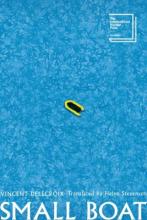
In November 2021, an inflatable dinghy carrying migrants from France to the UK capsized in the English Channel, causing the deaths of 27 people on board. Despite receiving numerous calls for help, the French authorities wrongly told the migrants they were in British waters ad had to call the British authorities for help. By the time rescue vessels arrived on the scene, nearly three hours later, all but two of the migrants had died, the worst single loss of life ever to occur in the Channel. Vincent Delecroix's acclaimed Small Boat is a fictional first-person account of the French navy officer who took the migrants' calls--and his attempts to justify the indefensible. Accused of failing in her duty, she refuses to be held more responsible than others for this disaster, than the crises behind these tragedies.
A stunning collection of personal observations that uses images of the American West to probe larger concerns in lyrical, evocative prose that is a true celebration of the region.
In the small town of Thistleford, on the edge of Faerie, dwells the mysterious Hawthorn family. There, they tend and harvest the enchanted willows and honour an ancient compact to sing to them in thanks for their magic--none more devotedly than the family's latest daughters Esther and Ysabel, who cherish each other as much as they cherish the ancient trees. But when Esther rejects a forceful suitor in favor of a lover from the land of Faerie, not only the sisters' bond but also their lives will be at risk.
Love is supposedly attainable for us all. But for most people, especially women, success with "love"--the yardstick we use to measure our value across romance, parenthood, sex, religion, and friendship--can feel out of reach, an experience frequently ascribed to a personal failing. This sense of unworthiness is, according to Shon Faye, "a form of exile: an intentional, punitive banishment that serves political ends." Faye, a trans woman in her thirties, has felt isolated from love for as long as she can remember. So after the devastation of her first heartbreak, she figured it was time to find out why.
A canny young woman is struggling to survive by perpetrating various levels of mostly harmless fraud. On a rainy April morning, she is reading auras at Spiritual Palms when Susan Burke walks in. A keen observer of human behavior, our unnamed narrator immediately diagnoses beautiful, rich Susan as an unhappy woman eager to give her lovely life a drama injection. However, when the "psychic" visits the eerie Victorian home that has been the source of Susan's terror and grief, she realizes she may not have to pretend to believe in ghosts anymore. Miles, Susan's teenage stepson, doesn't help matters with his disturbing manner and grisly imagination. The three are soon locked in a chilling battle to discover where the evil truly lurks and what, if anything, can be done to escape it.
Suzy, a witch, and Jada, a werewolf, meet on a dating app and go on a series of disastrous dates.
In the early 20th Century, the United States government concocted a plan to import hippopotamuses into the marshlands of Louisiana to be bred and slaughtered as an alternative meat source. This is true. Other true things about hippos: they are savage, they are fast, and their jaws can snap a man in two. This was a terrible plan. Contained within this volume is an 1890s America that might have been: a bayou overrun by feral hippos and mercenary hippo wranglers from around the globe. It is the story of Winslow Houndstooth and his crew. It is the story of their fortunes. It is the story of his revenge.
From the internationally bestselling author of The Reluctant Fundamentalist and How to Get Filthy Rich in Rising Asia, a love story that unfolds in a world being irrevocably transformed by migration. In a country teetering on the brink of civil war, two young people meet--sensual, fiercely independent Nadia and gentle, restrained Saeed. They embark on a furtive love affair, thrust into premature intimacy by the unrest roiling their city. When it explodes, turning familiar streets into a patchwork of checkpoints and bomb blasts, they begin to hear whispers about doors--doors that can whisk people far away, if perilously and for a price. As violence and the threat of violence escalate, Nadia and Saeed decide that they no longer have a choice. Leaving their homeland and their old lives behind, they find a door and step through. Exit West is an epic compressed into a slender page-turner--both completely of our time and for all time, Mohsin Hamid's most ambitious and electrifying novel yet.
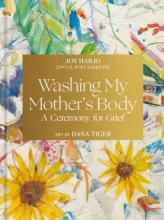
Through lyrical prose and evocative watercolor illustrations by award-winning Muscogee artist Dana Tiger, Washing My Mother's Body explores the complexity of a daughter's grief as she reflects on the joys and sorrows of her mother's life. She lays her mother to rest in the landscape of her memory, honoring the hands that raised her, the body that protected her, and the legs that carried her mother through adversity. Moving, comforting, and deeply emotional, Washing My Mother's Body is a tender look at mother-daughter relationships, the complexity of grieving the loss of a parent, and the enduring love of those left behind.

A novel narrated by a queer and hungry mountain lion living in the drought-devastated land beneath the Hollywood sign.
A Puritan woman goes missing deep in the woods of colonial New England, and soon must face the supernatural horrors that her people had only imagined up until then.
The inhabitants of the Rochester house wield a strange power over their neighbors -- a deliciously unsettling novel about a perverse, isolated, and possibly murderous family and the struggle that ensues when a cousin arrives at their estate.
In times of difficulty, with a government working against its own people, we must turn to our friends and loved ones to provide context, language, energy, and hope. The People's Project offers a range of perspectives, drawing wisdom from their communities and histories: from "know-your-place" aggression to "crip time" as a way forward, from finding strength in nature to how trans people provide a guide for the future, and how hope has everything to do with survival. We hope these meditations and strategies will provide you with inspiration and fortitude for the years ahead.
Walking through his own house at night, a fifteen-year-old thinks he sees another person stepping through a doorway. Instead of the people who could be there, his mother or his brother, the figure reminds him of his long-gone father, who died mysteriously before his family left the reservation. When he follows it he discovers his house is bigger and deeper than he knew.
What's the one dish you'd do anything to taste just one more time? Down a quiet backstreet in Kyoto exists a very special restaurant. Run by Koishi Kamogawa and her father Nagare, the Kamogawa Diner serves up deliciously extravagant meals. But that's not the main reason customers stop by . . . The father-daughter duo are 'food detectives'. Through ingenious investigations, they are able to recreate dishes from a person's treasured memories - dishes that may well hold the keys to their forgotten past and future happiness. The restaurant of lost recipes provides a link to vanished moments, creating a present full of possibility. A bestseller in Japan, The Kamogawa Food Detectives is a celebration of good company and the power of a delicious meal.

Celebrated for her powerful short fiction, Claire Keegan now gifts us three exquisite stories together forming a brilliant examination of gender dynamics and an arc from Keegan's earliest to her most recent work. In 'So Late in the Day,' Cathal faces a long weekend as his mind agitates over a woman with whom he could have spent his life, had he acted differently; in 'The Long and Painful Death' a writer's arrival at the seaside home of Heinrich Böll for a two-week writing residency is disrupted by an academic who imposes his criticisms and opinions; and in 'Antarctica' a married woman travels out of town to see what it's like to sleep with another man and ends up in the grip of a possessive stranger. Each story probes the dynamics that corrupt what could be between women and men: a lack of generosity, the weight of expectation, the looming threat of violence.
A bold and inspiring vision for how to orient our lives around gratitude, reciprocity, and community, based on the lessons of the natural world.
There's a princess trapped in a tower. This isn't her story. Meet Toadling. On the day of her birth, she was stolen from her family by the fairies, but she grew up safe and loved in the warm waters of faerieland. Once an adult though, the fae ask a favor of Toadling: return to the human world and offer a blessing of protection to a newborn child. Simple, right? But nothing with fairies is ever simple. Centuries later, a knight approaches a towering wall of brambles, where the thorns are as thick as your arm and as sharp as swords. He's heard there's a curse here that needs breaking, but it's a curse Toadling will do anything to uphold ...
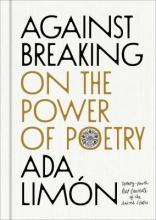
24th Poet Laureate of the United States Ada Limón inspires us to see poetry as much more than just words--as a powerful force for healing, a call to action, and a vibrant celebration of humanity's many voices.
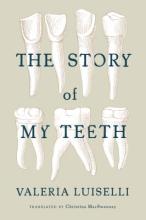
Bon vivant, world traveler, auctioneer-the story of Highway and his teeth is like Johnny Cash meets Robert Walser in Mexico.
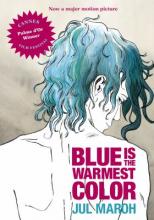
Blue is the Warmest Color is a graphic novel about growing up, falling in love, and coming out. Clementine, a high school student, has an average life: she has friends, family, and the romantic attention of the boys in her school. When her openly gay best friend takes her out on the town, she wanders into a lesbian bar where she encounters Emma: a punkish, confident girl with blue hair. Their attraction is instant and electric, and Clementine finds herself in a relationship that will test her friends, parents, and her own ideas about herself and her identity.
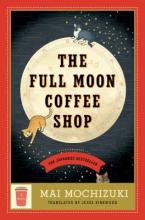
Translated from the Japanese bestseller, this charming and magical novel, inspired by the myth of cats returning favors to those who care for them, reminds us that it's never too late to follow our stars. In Japan, cats are a symbol of good luck. As the myth goes, if you are kind to them, they'll one day return the favor. And if you are kind to the right cat, you might just find yourself invited to a mysterious coffee shop under a glittering Kyoto moon. This particular coffee shop is like no other. It has no fixed location, no fixed hours, and seemingly appears at random to adrift young people at crucial junctions in their lives. It's also run by talking cats. While customers at the Full Moon Coffee Shop partake in cakes and coffees and teas, the cats also consult them on their star charts, offer cryptic wisdom, and let them know where their lives veered off course. Because every person who visits the shop has been feeling more than a little lost. And for a down-on-her-luck screenwriter, a romantically stuck movie director, a hopeful hairstylist and a technologically challenged website designer, the coffee shop's feline guides will set them back on their fated paths. For there is a very special reason the shop appeared to each of them.

A lyrical, philosophical, and often explicit exploration of personal suffering and the limitations of vision and love, as refracted through the color blue.
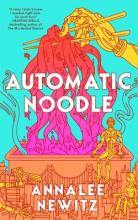
A cozy near-future novella about a crew of leftover robots opening their very own noodle shop, from acclaimed sci-fi author Annalee Newitz. You don't have to eat food to know the way to a city's heart is through its stomach. So when a group of deactivated robots come back online in an abandoned ghost kitchen, they decide to make their own way doing what they know: making food-the tastiest hand-pulled noodles around-for the humans of San Francisco, who are recovering from a devastating war. But when their robot-run business starts causing a stir, a targeted wave of one-star reviews threatens to boil over into a crisis. To keep their doors open, they'll have to call on their customers, their community, and each other-and find a way to survive and thrive in a world that wasn't built for them.
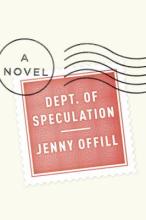
Dept. of Speculation is a portrait of a marriage. It is also a beguiling rumination on the mysteries of intimacy, trust, faith, knowledge, and the condition of universal shipwreck that unites us all. Jenny Offill's heroine, referred to in these pages as simply "the wife," once exchanged love letters with her husband, postmarked Dept. of Speculation, their code name for all the uncertainty that inheres in life and in the strangely fluid confines of a long relationship. As they confront an array of common catastrophes--a colicky baby, bedbugs, a faltering marriage, stalled ambitions--the wife analyzes her predicament, invoking everything from Keats and Kafka to the thought experiments of the Stoics to the lessons of doomed Russian cosmonauts. She muses on the consuming, capacious experience of maternal love, and the near total destruction of the self that ensues from it, as she confronts the friction between domestic life and the seductions and demands of art. With cool precision, in language that shimmers with rage and wit and fierce longing, Jenny Offill has crafted an exquisitely suspenseful love story that has the velocity of a train hurtling through the night at top speed. Exceptionally lean and compact, Dept. of Speculation can be read in a single sitting, but there are enough bracing emotional insights in these pages to fill a much longer novel.
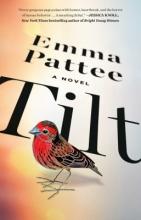
When a massive earthquake hits, a pregnant woman must make excruciating decisions toward survival in this ... debut novel set over the course of one day.
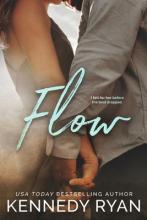
In 8 years, Marlon James will be one of the brightest rising stars in the music industry. Bristol Gray will be his tough, no-nonsense manager. But when they first meet, she's a college student finding her way in the world, and he's an artist determined to make his way in it. From completely different worlds, all the things that should separate them only draw them closer.
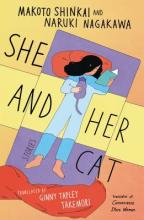
A collection of four interrelated, stream-of-consciousness short stories follows women and their cat companions as they explore the frailty of life, the pain of isolation, and the limits of communication.
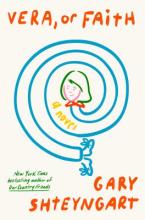
The Bradford-Shmulkin family is falling apart. A very modern blend of Russian, Jewish, Korean, and New England WASP, they love one another deeply but the pressures of life in an unstable America are fraying their bonds. There's Daddy, a struggling, cash-thirsty editor whose Russian heritage gives him a surprising new currency in the upside-down world of twenty-first-century geopolitics; his wife Anne Mom, a progressive, underfunded blue blood from Boston who's barely holding the household together; their son Dylan, whose blond hair and Mayflower lineage provide him pride of place in the newly forming American political order; and above all, the young Vera: half-Jewish, half-Korean, and wholly original. Observant, sensitive, and always writing down new vocabulary words, Vera wants only three things in life: to make a friend at school; Daddy and Anne Mom to stay together; and to meet her birthmother, Mom Mom, who will at last tell Vera the secret of who she really is and how to ensure love's survival in this great, mad, imploding world.
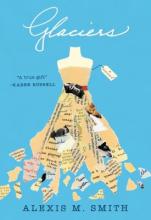
Isabel is a single, twentysomething thrift-store shopper and collector of remnants, things cast off or left behind by others. "Glaciers" follows Isabel through a day in her life in which work with damaged books in the basement of a library, unrequited love for the former soldier who fixes her computer, and dreams of the perfect vintage dress move over a backdrop of deteriorating urban architecture and the imminent loss of the glaciers she knew as a young girl in Alaska.
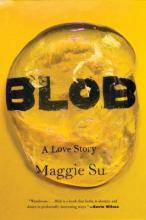
The daughter of a Taiwanese father and white mother, Vi Liu has never quite fit into her Midwestern college town. Aimless after getting dumped by her boyfriend and dropping out of college, Vi works at the front desk of a hotel where she greets guests, refills cucumber water samovars, and tries to evade her bubbly blond coworker, Rachel. Little does Vi know her life is about to be permanently transformed when she agrees to a night out with Rachel. In the alley outside the bar, Vi discovers a strange blob--a small living creature with beady black eyes. In a moment of concern and drunken desperation, she takes it home. But the blob is no ordinary pet. Becoming increasingly sentient, it begins to grow, shift shape, and obey Vi's commands. As the entity continues to change, Vi is struck with a daring idea: she'll mold the creature into her ideal partner. Feeding it a stream of sweet breakfast cereals and American pop culture, the creature grows into a movie-star handsome white man. But when Vi's desire to be loved unconditionally threatens to spiral out of control, she is forced to confront her lonely childhood, her aloof ex-boyfriend, and the racial marginalization that has defined her relationships--a journey of self-discovery that teaches her it's impossible to control those you love.
There is a Wild Man who lives in the deep quiet of Greenhollow, and he listens to the wood. Tobias, tethered to the forest, does not dwell on his past life, but he lives a perfectly unremarkable existence with his cottage, his cat, and his dryads. When Greenhollow Hall acquires a handsome, intensely curious new owner in Henry Silver, everything changes. Old secrets better left buried are dug up, and Tobias is forced to reckon with his troubled past--both the green magic of the woods, and the dark things that rest in its heart.
A woman who believes she is living a perfect life begins to wonder why her husband is away at work so much, and also what is in the locked basement she is not permitted to enter.
A murderous android discovers itself in "All Systems Red", a tense science fiction adventure by Martha Wells that interrogates the roots of consciousness through Artificial intelligence. In a corporate-dominated spacefaring future, planetary missions must be approved and supplied by the Company. Exploratory teams are accompanied by Company-supplied security androids, for their own safety. But in a society where contracts are awarded to the lowest bidder, safety isn't a primary concern. On a distant planet, a team of scientists are conducting surface tests, shadowed by their Company-supplied 'droid -- a self-aware SecUnit that has hacked its own governor module, and refers to itself (though never out loud) as "Murderbot." Scornful of humans, all it really wants is to be left alone long enough to figure out who it is. But when a neighboring mission goes dark, it's up to the scientists and their Murderbot to get to the truth.
When August, an anthropologist who has studied the funeral traditions of different cultures, revisits her old neighborhood after her father's death, her reunion with a brother and a chance encounter with an old friend bring back a flood of childhood memories. Flashbacks depict the isolation she felt moving from rural Tennessee to New York and show how her later years were influenced by the black power movement, nearby street violence, her father's religious conversion, and her mother's haunting absence. August's memories of her Brooklyn companions--a tightly knit group of neighborhood girls--are memorable and profound. There's dancer Angela, who keeps her home life a carefully guarded secret; beautiful Gigi, who loses her innocence too young; and Sylvia, "diamonded over, brilliant," whose strict father wants her to study law. With dreams as varied as their conflicts, the young women confront dangers lurking on the streets, discover first love, and pave paths that will eventually lead them in different directions.