
Indigenous Peoples Heritage Month (IPHM) is celebrated each year in November. During this month we celebrate the diverse cultures, traditions, and histories of Native and Indigenous communities. It is intended to uplift the voices and acknowledge the contributions of all Native peoples.
You can also view all these titles as one list.
Fiction Books | Nonfiction Books
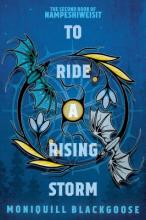
Anequs has not only survived her first year at Kuiper's Academy but exceeded her professors' admittedly low expectations--and passed all her courses with honors. Now she and her dragon, Kasaqua, are headed home for the summer, along with Theod, the only other native student at the Academy. But what should have been a relaxing break takes a darker turn. Thanks to Anequs's notoriety, there is an Anglish presence on Masquapaug for the first time ever: a presence that Anequs hates. Anequs will always fight for what she believes in, however, and what she believes in is her people's right to self-govern and live as they have for generations, without the restrictive yoke of Anglish rules and social customs. And fight she will--even if it means lighting a spark that may flare into civil war.
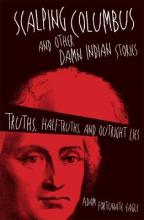
"Scalping Columbus" is a collection of short stories that are in part autobiographical and in part fictional. Narrated in a style reminiscent of Indian oral tradition, Fortunate Eagle employs humor and satire to entertain and challenge society. The stories range from author's experiences as an activist in the Bay Area to his encounter with the Pope in Rome and back to his childhood.

Many Indigenous people believe that one should never whistle at night. This belief ranges far and wide and takes many forms; for instance, Native Hawaiians believe it summons the Hukai'po, the spirits of ancient warriors, and Native Mexicans say it calls a Lechuza, a witch that can transform into an owl and snatch the foolish whistlers in the dark. But what all these legends hold in common is the certainty that whistling at night can cause evil spirits to appear-and even follow you home.
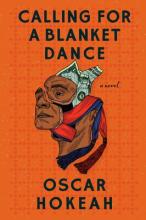
A young Native American boy in a splintering family grasps for stability and love, making all the wrong choices until he finds a space of his own.

Peter Straub's Ghost Story meets Liane Moriarty's Big Little Lies in this American Indian horror story of revenge on the Blackfeet Indian Reservation. Four American Indian men from the Blackfeet Nation, who were childhood friends, find themselves in a desperate struggle for their lives, against an entity that wants to exact revenge upon them for what they did during an elk hunt ten years earlier by killing them, their families, and friends.
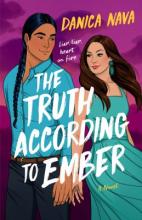
Ember Lee Cardinal has not always been a liar, not for anything that counted. But when her résumé is rejected thirty-seven times, she... gets creative listing her work experience and answers the ethnicity question on all job applications with a lie. No one wanted Native American Ember, but Caucasian Ember landed her dream accounting job on Park Avenue (Oklahoma). Accountant Ember thrives in corporate life--and... she starts to secretly date the IT guy and fellow Native, Danuwoa. But when they're caught... a scheming mid-level executive threatens to expose them unless Ember manipulates the company's accounting books for him.

Extending his constellation of narratives into the past and future, Tommy Orange once again delivers a story that is by turns shattering and wondrous, a book piercing in its poetry, sorrow, and rage—a masterful follow-up to his already-classic first novel, and a devastating indictment of America’s war on its own people.

July 1962. A Mi'kmaq family from Nova Scotia arrives in Maine to pick blueberries for the summer. Weeks later, four-year-old Ruthie... is last seen by her six-year-old brother, Joe, sitting on her favorite rock at the edge of a berry field. Joe will remain deeply affected by his sister's disappearance for years to come. In Boston, a young girl named Norma grows up as the only child of an affluent family. Her father is emotionally distant, her mother frustratingly overprotective. Norma is often troubled by recurring dreams and visions that seem more like memories than imagination. As she grows older, Norma slowly comes to realize there is something her parents aren't telling her. Unwilling to abandon her intuition, she will spend decades trying to uncover this family secret.
The story of the unrivaled desire for healing and the power of familial bonds across five generations of Métis women and the land and bison that surround them.

When Elān trapped a salmon-stealing raven in his cupboard, he never expected it would hold the key to saving his people from the shapeshifting Koosh invaders plaguing their shores. In exchange for its freedom, the raven offers a secret that can save Elān's home: the Koosh have lost one of their most powerful weapons, and only the raven knows where it is. Elān is tasked with captaining a canoe crewed by an unlikely team including a human bear-cousin, a massive wolf, and the endlessly vulgar raven.[...]But Elān is a storyteller, not a warrior. As their world continues to fall to the Koosh, and alliances are challenged and broken, Elān must choose his role in his own epic story.

From the porch of his home, Charles Lamosway has watched the life he might have had unfold across the river on Maine's Penobscot Reservation. On the far bank, he caught brief moments of his neighbor Elizabeth's life -- from the day she came home from the hospital to her early twenties. But there's always been something deeper and more dangerous than the river that divides him from her and the rest of the tribal community. It's the secret that Elizabeth is his daughter, a secret Charles is no longer willing to keep. Now, it's been weeks since he's seen Elizabeth, and Charles is worried. As he attempts to hold on to and care for what he can -- his home and property; his alcoholic, quick-tempered, and bighearted friend Bobby; and his mother, Louise, who is slipping ever deeper into dementia -- he becomes increasingly haunted by his past.
In 1817, explorers Spix and Martius returned from their three-year voyage in Brazil with not only an extensive account of their journey, but also with an Indigenous boy and girl, Ine-e and Juri. Kidnapped from rival tribes as part of the colonialist trend of collecting "living specimens" on scientific expeditions, the two tragically perished shortly after arriving in Europe. This lyrically rich novel takes their perspective to illuminate their harrowing journey. Micheliny Verunschk's fifth novel, the first to be translated into English, powerfully challenges dominant historical narratives by centering the voices of these stolen Indigenous children. Intertwining their story with a narrative set in contemporary Brazil, we meet Josefa, a young woman grappling with her own identity when she encounters Ine-e's image in an exhibition.
The narrator of this beautiful, sometimes bizarre tale is a sensitive, self-destructive young man living on the Blackfoot Reservation in Montana. He is haunted by memories – of an older brother, dead at the age of fourteen; of his father (who made white men laugh at the local bar), found frozen to death in a snowdrift; and of his once-proud heritage. He sleepwalks through his chores, consoles himself with women. The visions he sees and the echoes he hears are swallowed up in Montana’s vast emptiness. Yet he struggles against that emptiness, searching for something that will bind him to the land of his ancestors.
The most enduring feature of U.S. history is the presence of Native Americans, yet most histories focus on Europeans and their descendants. This long practice of ignoring Indigenous history is changing, however, as a new generation of scholars insists that any full American history address the struggle, survival, and resurgence of American Indian nations. ... Ned Blackhawk interweaves five centuries of Native and non-Native histories, from Spanish colonial exploration to the rise of Native American self-determination in the late twentieth century.
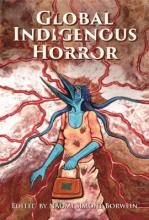
Global Indigenous Horror is a collection of essays that positions Indigenous Horror as more than just a genre, but as a narrative space where the spectral and social converge, where the uncanny becomes a critique, and the monstrous mirrors the human. While contentions swirl around the genre category, this exploratory anthology is the first critical edited collection dedicated solely to ways of theorizing and analyzing Indigenous Horror literature. The essays, curated by scholar Naomi Simone Borwein, ask readers to consider what Global Indigenous Horror is-and to whom.

"For the members of a Northern California tribe, salmon are the lifeblood of the people--a vital source of food, income, and cultural identity. When a catastrophic fish kill devastates the river, Amy Bowers Cordalis is propelled into action, reigniting her family's 170-year battle against the U.S. government. In a moving and engrossing blend of memoir and history, Cordalis propels readers through generations of her family's struggle, where she learns that the fight for survival is not only about fishing--it's about protecting a way of life and the right of a species and river to exist.
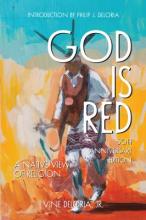
Vine Deloria, Jr. was named by TIME magazine as one of the greatest religious thinkers of the twentieth century. He was a leading Native American thinker whose research, writings, and teachings on history, law, religion, and politics changed the face of Indian Country, and his influence continues to impact present and future generations of Native and non-Native Americans alike. He has authored many acclaimed and bestselling books, including The World We Used to Live In; Evolution, Creationism, and Other Modern Myths; Red Earth, White Lies; Spirit and Reason; and Custer Died for Your Sins. Wilma Mankiller, former Principal Chief of the Cherokee Nation said of him, "All humans benefited from the knowledge Vine shared with us."
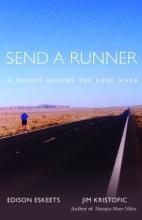
The Navajo tribe the Diné are the largest tribe in the United States and live across the American Southwest. But over a century ago, they were nearly wiped out by the Long Walk, a forced removal of most of the Diné people to a military-controlled reservation in New Mexico. The summer of 2018 marked the 150th anniversary of the Navajos' return to their homelands. One Navajo family and their community decided to honor that return: Edison Eskeets and his family organized a ceremonial run from Spider Rock in Canyon de Chelly, Arizona, to Santa Fé, New Mexico, in order to deliver a message and to honor the survivors.
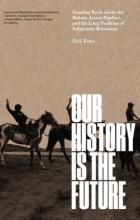
In 2016, a small protest encampment at the Standing Rock reservation in North Dakota, initially established to block construction of the Dakota Access oil pipeline, grew to be the largest Indigenous protest movement in the twenty-first century, attracting tens of thousands of Indigenous and non-Native allies from around the world. Its slogan "Mni Wiconi"--Water is Life--was about more than just a pipeline. Water Protectors knew this battle for Native sovereignty had already been fought many times before, and that, even after the encampment was gone, their anti-colonial struggle would continue.
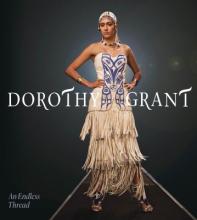
Inspired by a discussion with celebrated Haida artist Bill Reid, Haida designer Dorothy Grant made it her life's mission to bring her culture's traditional art into contemporary fashion while adhering to the principle of Yaguudang, or respect for oneself and others. The 1989 launch of her Feastwear collection, featuring modern silhouettes hand-appliquéd with Northwest Coast formline, immediately established her at the forefront of Indigenous fashion in North America, and she has since hosted runway shows and trunk sales from Paris to Vancouver to Tokyo. Her clients include notable figures such as Prime Minister Kim Campbell, actor Duane Howard, Governor General Mary Simon, and author and broadcaster David Suzuki, and her garments can be found in museums and galleries around the world, including the Metropolitan Museum of Art

In this lyrical meditation about the why of writing poetry, Joy Harjo reflects on significant points of illumination, experience, and questioning from her fifty years as a poet. Comprised of intimate vignettes that take us through the author's life journey as a youth in the late 1960s, a single mother, and a champion of Native nations, this book offers a fresh understanding of how poetry functions as an expression of purpose, spirit, community, and memory. Harjo insists the most meaningful poetry is birthed through cracks in history from what is broken and unseen. At the crossroads of this brokenness, she calls us to watch and listen for the songs of justice for all those America has denied. This is an homage to the power of words to defy erasure--to inscribe the story, again and again, of who we have been, who we are, and who we can be.
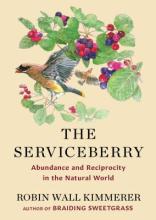
A bold and inspiring vision for how to orient our lives around gratitude, reciprocity, and community, based on the lessons of the natural world.
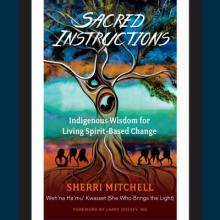
Sherri Mitchell draws from Indigenous knowledge and ancestral wisdom, as well as her experience as a lawyer and activist, to address some of the most crucial issues we face today--including indigenous land rights, environmental justice, and our collective human survival. Sharing the gifts she has received from the elders of her tribe, the Penobscot Nation, she asks us to look deeply into the illusions we have labeled as truth and which separate us from our higher mind and from one another. Sacred Instructions explains how our traditional stories set the framework for our belief systems, and urges us to decolonize our language and our stories.

In the highly anticipated sequel to her first Central American cookbook, Amalia Moreno-Damgaard goes beyond borders to explore modern takes on ancient Latin American recipes. Mesoamerica―or Middle America―has a rich history dating back to the Olmec, Maya and Aztec empires, and early Central American peoples with culinary traditions that are still alive today. After years of travel and kitchen camaraderie with indigenous cooks proudly safeguarding their traditions, Amalia has created 130+ variations on time-honored dishes.
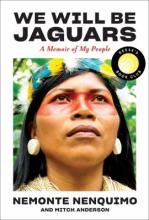
Born into the Waorani tribe of Ecuador's Amazon rainforest--one of the last to be contacted by missionaries in the 1950s--Nemonte Nenquimo had a singular upbringing. Two decades later, Nemonte has emerged as one of the most forceful voices in climate change activism. She has spearheaded the alliance of indigenous nations across the Upper Amazon and led her people to a landmark victory against Big Oil, protecting over a half million acres of primary rainforest. Her message is as sharp as a spear--honed by her experiences battling loggers, miners, oil companies and missionaries.

The Red Deal is a call for action beyond the scope of the US colonial state. It's a program for Indigenous liberation, life, and land--an affirmation that colonialism and capitalism must be overturned for this planet to be habitable for human and other-than-human relatives to live dignified lives. The Red Deal is not a response to the Green New Deal, or a "bargain" with the elite and powerful. It's a deal with the humble people of the earth; a pact that we shall strive for peace and justice and a declaration that movements for justice must come from below and to the left.

This poetry collection focuses on a hybridized Indigiqueer trickster character named Zoa who brings together the organic (the protozoan) and the technologic (the binaric) to re-beautify and re-member queer Indigeneity. A Two-Spirit/Indigiqueer invention, Zoa infects, invades, and infests as a virus inside canonical and popular works in order to re-centre the lives of Two-Spirit individuals. In their fierce defence, Zoa takes on the likes of Shakespeare, Spenser, Dickens, and Milton, romps through the fields of cyberpunks and biopunks, takes notes from popularized horror icons, and emulates contemporary pop-culture phenomenons like Lana del Rey, RuPaul's Drag Race, X-Men, Grindr, and Peter Pan -- all to build new territories in literature, pop culture, and oral storytelling.
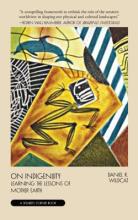
In On Indigenuity, leading Indigenous thinker Daniel Wildcat explores the concept of Indigenuity and Indigenous thought. Throughout his essay, Wildcat deftly synthesizes several related ideas, including science, the environment, biology, and our culture, infusing his writing with both care and passion. With future generations firmly in mind, he argues that restoration of Native knowledge is essential for saving humankind and the planet. On Indigenuity is a part of Fulcrum Publishing's Speakers Corner Books series.
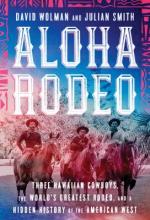
n August 1908, three unknown riders arrived in Cheyenne, Wyoming, their hats adorned with wildflowers, to compete in the world’s greatest rodeo. They had travelled 3,000 miles from Hawaii, where their ancestors had herded cattle for generations, to test themselves against the toughest riders in the West. Dismissed by whites, who considered themselves the only true cowboys, the Hawaiians left the heartland as champions—and American legends.