
How do we recognize a mind that doesn’t think like ours? Strange Life challenges the boundaries of thought and intelligence. Discover the hidden cognition of fungal networks, exploring how mycelium sense, communicate, remember, and make decisions without a nervous system. Then, journey into the lab studying brain organoids, clusters of human neurons that can learn, respond, and blur the line between tissue and mind. What happens when life starts inventing new bodies?
About Curiosity Collective
Step beyond the ordinary with Curiosity Collective, where adults gather for thoughtful conversations in venues across Denver—from bookstores and cafés to bars and cultural spaces. Each event brings together speakers from very different backgrounds to explore a single theme from unexpected perspectives. Talks are short, engaging, and rooted in personal experience or professional insight. After both talks, the audience submits questions, votes on what to explore further, and joins a collective conversation. See upcoming events in our calendar.

Oryx and Crake is at once an unforgettable love story and a compelling vision of the future. Snowman, known as Jimmy before mankind was overwhelmed by a plague, is struggling to survive in a world where he may be the last human, and mourning the loss of his best friend, Crake, and the beautiful and elusive Oryx whom they both loved. In search of answers, Snowman embarks on a journey–with the help of the green-eyed Children of Crake–through the lush wilderness that was so recently a great city, until powerful corporations took mankind on an uncontrolled genetic engineering ride. Margaret Atwood projects us into a near future that is both all too familiar and beyond our imagining.
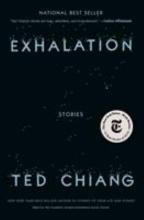
In Exhalation, Chiang’s new collection, he extends his curiosity about consciousness to a wider variety of creatures: robots; digital pets; parrots; parallel selves. Throughout, he writes with the same rigor about the connection between minds and bodies, the way that perception shapes experience: whether it is the “cognition engine” of a kind of pneumatic robot (“My consciousness could be said to be encoded… in the ever-shifting pattern of air driving these leaves”), or the vocal learning and contact calls of Puerto Rican parrots. As the parrot narrator of “The Great Silence” reminds us, we do not need to make contact with extraterrestrials to communicate with an “alien” intelligence: “We’re a nonhuman species capable of communicating with them. Aren’t we exactly what humans are looking for?” - Electric Lit
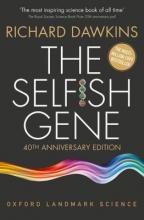
"The Selfish Gene" caused a wave of excitement among biologists and the general public when it was first published in 1976. Its vivid rendering of a gene's eye view of life, in lucid prose, gathered together the strands of thought about the nature of natural selection into a conceptual framework with far-reaching implications for our understanding of evolution. Time has confirmed its significance. Intellectually rigorous, yet written in non-technical language, "The Selfish Gene" is widely regarded as a masterpiece of science writing, and its insights remain as relevant today as on the day it was published.
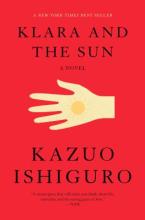
From her place in the store that sells artificial friends, Klara--an artificial friend with outstanding observational qualities--watches carefully the behavior of those who come in to browse, and of those who pass in the street outside. She remains hopeful a customer will soon choose her, but when the possibility emerges that her circumstances may change forever, Klara she is warned not to invest too much in the promises of humans. In this luminous tale, Klara and the Sun, Nobel Prize winner Kazuo Ishiguro looks at our rapidly changing modern world through the eyes of an unforgettable narrator to explore a fundamental question: what does it mean to love?
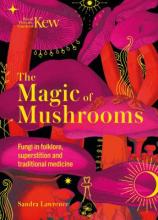
At the centre of countless superstitions, folkloric tales and magical beliefs, as well as appearing in recipes and medicines both traditional and modern, mushrooms have incredible powers.
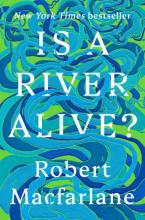
An exploration of an ancient, urgent idea: that rivers are living beings who should be recognized as such in imagination and law. Macfarlane takes readers on three ... journeys teeming with extraordinary people, stories, and places: to the miraculous cloud-forests and mountain streams of Ecuador, to the wounded creeks and lagoons of India, and to the spectacular wild rivers of Canada--imperiled respectively by mining, pollution, and dams. Braiding these journeys is the life story of the fragile chalk stream a mile from Macfarlane's house.
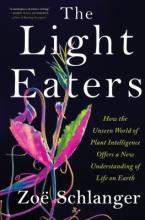
A book exploring the emerging science on plant intelligence, uncovering plants' complex and unimaginable capabilities and calling into question what we consider to be conscious agents in the natural world.
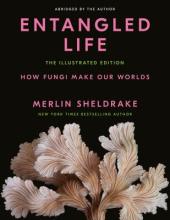
When we think of fungi, we likely think of mushrooms. But mushrooms are only fruiting bodies, analogous to apples on a tree. Most fungi live out of sight yet make up a massively diverse kingdom of organisms that supports and sustains nearly all living systems. Fungi provide a key to understanding the planet on which we live, and the ways we think, feel, and behave. In the first edition of the mind-bending, "gorgeous" (Margaret Atwood), "brilliant [and] entrancing" (The Guardian) Entangled Life, Sheldrake introduced us to this mysterious but massively diverse kingdom of life. This new edition, abridged from the original, features over 100 full-color images that bring the spectacular variety, strangeness and beauty of fungi to life as never before. Fungi throw our concepts of individuality and even intelligence into question. They are metabolic masters, earth makers, and key players in most of life's processes. They can change our minds, heal our bodies, and even help us remediate environmental disaster. In vivid, surprising images, Sheldrake reveals how these extraordinary organisms--and our relationships with them--are changing our understanding of how life work.
Before Area X, there was Ambergris. Jeff VanderMeer conceived what would become his first cult classic series of speculative works: the Ambergris Trilogy. Now, for the first time ever, the story of the sprawling metropolis of Ambergris is collected into a single volume, including City of Saints and Madmen, Shriek: An Afterword, and Finch.
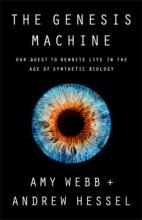
Synthetic biology is the promising and controversial technology platform that combines biology and artificial intelligence, opening up the potential to program biological systems much as we program computers. Synthetic biology enables us not just to read and edit DNA - the technique of CRISPR - but also write it. Rather than life being "a beautiful game of chance", synthetic biology creates the potential to control our genetic destiny, to say "no" to bad genes and build a veritable genetic app store for downloading and adding new capabilities into any cell, microbe, plant, or animal. Amy Webb and Andrew Hessel's riveting stories include: the work of scientists to develop plants that can be grown in sprawling indoor farms capable of feeding millions with a fraction of the usual resources required; a synthetic, self-regulating insulin that doesn't require injections or a pump; life-altering regenerative, personalized medicine; and novel, durable solutions to climate change. There is also whimsy, such as the dream of some geneticists to "unextinct" the wooly mammoth. By examining both the science and the ethical, moral, and religious issues surrounding synthetic biology, Webb and Hessel provide the background for preventing its misuse by some to re-engineer their bodies and that of their children, further increasing the disturbing division and polarization of societies into the haves (the enhanced) and the have nots. They provide the background for making wise decisions about issues such as: whether to program novel viruses to fight diseases, what genetic privacy will look like, who will "own" living organisms, how companies should earn revenue from engineered cells, and how to contain a synthetic organism in a lab. Whether we approve or disapprove of synthetic biology, it is coming. Now, we need to understand its promise and peril. Webb and Hessel help us understand the science as well as the political and societal issues involved.