
July is Disability Pride Month. This list of titles has been selected and curated by our staff to reflect the huge diversity of the disability experience.
You can read about specific titles below or view them as a single list.
Nonfiction | Fiction
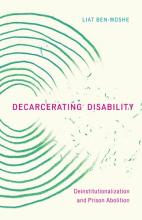
Many argue that the rise of deinstitutionalization led directly to the rise of imprisonment. Liat Ben-Moshe complicates this narrative by looking closely at how people of color and disabled people are pathologized as well as how profit plays a roll in caring for "disposable" populations in nursing homes, rehab facilities, prisons, etc. Ben-Moshe puts forth a theory of carceral abolition as a way to understand the failed utopian dream of deinstitutionalization and how to move forward.
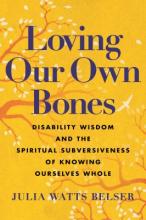
A spiritual companion and political manifesto that cuts through objectification and inspiration alike to offer a powerful new account of disability in biblical narrative and contemporary culture.
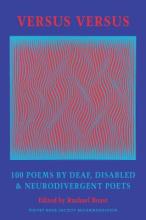
The word versus means one thing pitched against another. To be versus versus, therefore, is a paradox, but paradox can be helpful - it can open a space for deeper thought. This anthology aims to be such a space. It brings together one hundred deaf, disabled and neurodivergent poets from across the international arena, from emerging voices to world-renowned authors, and offers an urgent redress, unpicking many misapprehensions and misrepresentations.
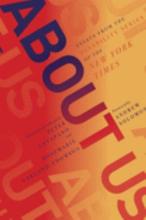
Speaking not only to those with disabilities, but also to their families, coworkers and support networks, the authors in About Us offer intimate stories of how they navigate a world not built for them. Since its 2016 debut, the popular New York Times' "Disability" column has transformed the national dialogue around disability. Now, echoing the refrain of the disability rights movement, "Nothing about us without us," this landmark collection gathers the most powerful essays from the series that speak to the fullness of human experience-stories about first romance, childhood shame and isolation, segregation, professional ambition, child-bearing and parenting, aging and beyond.
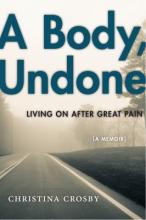
In the early evening on October 1, 2003, Christina Crosby was three miles into a seventeen mile bicycle ride[...]As she crested a hill, she caught a branch in the spokes of her bicycle, which instantly pitched her to the pavement.[..]In that instant, she was paralyzed. In A Body, Undone, Crosby puts into words a broken body that seems beyond the reach of language and understanding. She writes about a body shot through with neurological pain, disoriented in time and space, incapacitated by paralysis and deadened sensation. To address this foreign body, she calls upon the readerly pleasures of narrative, critical feminist and queer thinking, and the concentrated language of lyric poetry.
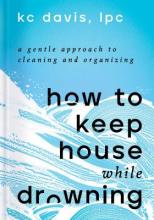
For anyone tired of staring at the same mess every day but struggling to find the time and willpower to fix it, popular therapist and Tiktok star KC Davis presents a revolutionary method of cleaning to end the stress-mess cycle.
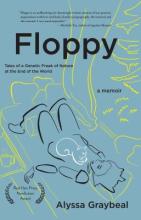
When ten-year-old Alyssa is diagnosed with the rare genetic connective tissue disorder Ehlers-Danlos syndrome, she vows not to let it stop her. Unfortunately, her efforts to avoid being "too sensitive" lead her to neglect not only her health but other aspects of her life as well. Twenty years later, she’s finally forced to confront the reality of her condition head on. When she finds herself tangled in an unwieldy combination of chronic pain, a library job for which she is particularly ill-suited, and her wife’s mystifying health problems, her body starts to unravel in ways she can no longer ignore. If pushing through is not the answer, what does homecoming to her floppy body even look like?
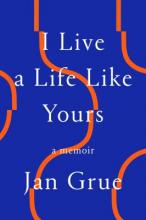
Jan Grue was diagnosed with spinal muscular atrophy at the age of three. Shifting between specific periods of his life--his youth with his parents and sister in Norway; his years of study in Berkeley, St. Petersburg, and Amsterdam; and his current life as a professor, husband, and father--he intersperses these histories with elegant, astonishingly wise reflections on the world, social structures, disability, loss, relationships, and the body: in short, on what it means to be human. Along the way, Grue moves effortlessly between his own story and those of others, incorporating reflections on philosophy, film, art, and the work of writers from Joan Didion to Michael Foucault.
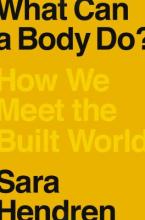
In a series of vivid stories drawn from the lived experience of disability and the ideas and innovations that have emerged from it—from cyborg arms to customizable cardboard chairs to deaf architecture—Sara Hendren invites us to rethink the things and settings we live with. What might assistance based on the body’s stunning capacity for adaptation—rather than a rigid insistence on “normalcy”—look like? Can we foster interdependent, not just independent, living? How do we creatively engineer public spaces that allow us all to navigate our common terrain? By rendering familiar objects and environments newly strange and wondrous, What Can a Body Do? helps us imagine a future that will better meet the extraordinary range of our collective needs and desires.
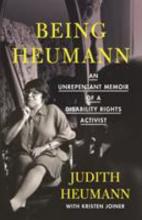
One of the most influential disability rights activists in US history tells her personal story of fighting for the right to receive an education, have a job, and just be human. A story of fighting to belong in a world that wasn't built for all of us and of one woman's activism--from the streets of Brooklyn and San Francisco to inside the halls of Washington--Being Heumann recounts Judy Heumann's lifelong battle to achieve respect, acceptance, and inclusion in society.
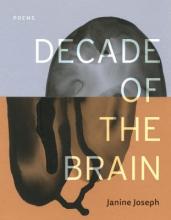
In the deeply personal Decade of the Brain, Janine Joseph writes of a newly-naturalized American citizen who suffers from post-concussive memory loss after a major auto accident. The collection is an odyssey of what it means to recover-physically and mentally-in the aftermath of trauma and traumatic brain injury, charting when "before" crosses into "after." Through connected poems, buckling and expansive syntax, ekphrasis, and conjoined poetic forms, Decade of the Brain remembers and misremembers hospital visits, violence and bodily injury, intimate memories, immigration status, family members, and the self.
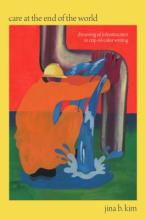
In Care at the End of the World, Jina B. Kim develops what she calls crip-of-color critique, bringing a disability lens to bear on feminist- and queer-of-color literature in the aftermath of 1996 US welfare reform and the subsequent evisceration of social safety nets. She examines literature by contemporary feminist, queer, and disabled writers of color such as Jesmyn Ward, Octavia Butler, Karen Tei Yamashita, Samuel Delany, and Aurora Levins Morales, who each bring disability and dependency to the forefront of their literary freedom dreaming.
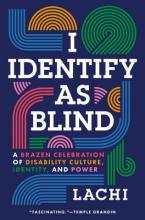
Lachi is an award-winning musician and leader who awakens the world to this truth: Disability has long shaped our culture and is an identity worth brazenly celebrating. In this book, Lachi welcomes readers into the vibrant world of Disability Culture, centering identity, innovation, and unapologetic pride. I Identify as Blind pulses with energy. Through magnetic storytelling, pop-culture deep dives, and historical insight, Lachi challenges mainstream views on disability with humor, heart, and high fashion. She reveals how the adaptability of visionaries with disabilities throughout the years have always driven progress.
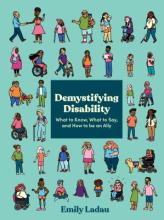
A guide for how to be a thoughtful, informed ally to disabled people, with actionable steps for what to say and do (and what not to do) and how you can help make the world a more accessible place.
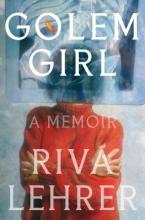
In 1958, Riva is one of the first children born with spina bifida to survive. Her parents and doctors are determined to "fix" her, sending the message over and over again that she is broken. That she will never have a job, a romantic relationship, or an independent life. Enduring countless medical interventions, Riva tries her best to be a good girl and a good patient in the quest to be cured. Everything changes when, as an adult, Riva is invited to join a group of artists, writers, and performers who are building Disability Culture. Their work is daring, edgy, funny, and dark; it rejects tropes that define disabled people as pathetic, frightening, or worthless.
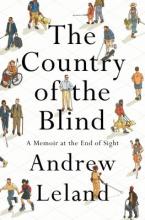
We meet Andrew Leland as he's[...] midway through his life with retinitis pigmentosa, a condition that ushers those who live with it from complete sightedness to complete blindness over a period of years, even decades.[...] Full of apprehension but also dogged curiosity, Leland embarks on a sweeping exploration of the state of being that awaits him: not only the physical experience of blindness but also its language, internal debates, politics, and customs. [...] Part memoir, part historical and cultural investigation, The Country of the Blind represents Leland's determination not to merely survive this transition, but to grow from it-to seek out and revel in that which makes blindness enlightening.
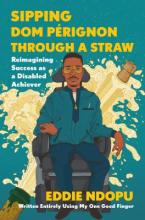
Born with spinal muscular atrophy, ... Eddie was told that he wouldn't live beyond age five. But using his razor-sharp mind and grit, Eddie became the first-ever disabled African awarded a full scholarship to the prestigious Oxford University... But beyond the challenges that students face-making it to class on time, managing steamy crushes, and being student body president, Eddie faced obstacles as a disabled individual that often go unnoticed and unaddressed[...]. Saddled with the burden of raising money to cover his most basic needs: a care aide, financial aid, and disability accommodations, Eddie writes about his fight for financial aid and his continued advocacy for the rights of people with disabilities.
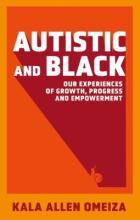
In this powerful insight into the lives of Black autistic people, Kala Allen Omeiza brings together a community of voices from across the world, spanning religions, sexuality and social economic status to provide a deep and rich understanding of what it means to be autistic and Black. Exploring everything from self-love and appreciation, to the harsh realities of police brutality, anti-Black racism, and barriers to care, as well as amplifying the voices of the inspiring advocates who actively work towards change, protection, and acceptance for themselves and others, this book is an empowering force, reminding you that as a Black autistic person, you are enough.
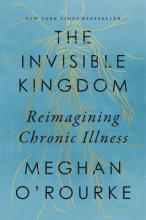
A silent epidemic of chronic illnesses afflicts tens of millions of Americans: these are diseases that are poorly understood, frequently marginalized, and can go undiagnosed and unrecognized altogether ... O'Rourke [investigates] this elusive category of 'invisible' illness that encompasses autoimmune diseases, post-treatment Lyme disease syndrome, and now long-COVID, synthesizing the personal and the universal to help all of us through this new frontier.
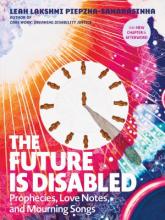
Written over the course of two years of disabled isolation during the pandemic, this is a book of love letters to other disabled QTBIPOC (and those concerned about disability justice, the care crisis, and surviving the apocalypse); honor songs for kin who are gone; recipes for survival; questions and real talk about care, organizing, disabled families, and kin networks and communities; and wild brown disabled femme joy in the face of death. With passion and power, The Future Is Disabled remembers our dead and insists on our future.
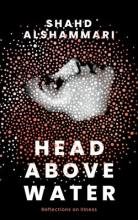
Head Above Water is the intimate, philosophical memoir of Shahd Alshammari's life of triumph and resistance, as a woman marked "ill" by society and as a lifelong reader, student, and teacher. Charting her journey with raw honesty, Alshammari explores disability, displacement, and belonging--not only of the body, but of culture, gender, and race, and imparts wisdom of profound philosophical value throughout. It is people, human connections, that keep us afloat, she argues--"and in storytelling we have the power to gain a sense of agency over our lives."
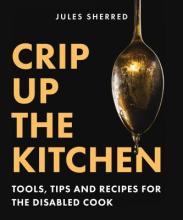
When Jules Sherred discovered the Instant Pot multicooker, he was thrilled. And incensed. How had no one told him what a gamechanger this could be, for any home cook but in particular for those with disabilities and chronic illness? And so the experimenting--and the evangelizing--began. The kitchen is the most ableist room in the house. With 50 recipes that make use of three key tools--the electric pressure cooker, air fryer, and bread machine--Jules has set out to make the kitchen accessible and enjoyable. The book includes pantry prep, meal planning, shopping guides, kitchen organization plans, and tips for cooking safely when disabled, all taking into account varying physical abilities and energy levels.
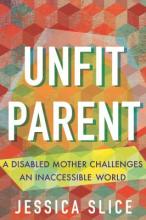
Combining her personal experiences with interviews, research-backed evidence, and disability studies, Slice shares insight into what the landscape is like for disabled parents—one that is scattered with unpredictable obstacles and inaccessible barriers. In overcoming these challenges, she describes how disabled parents are oftentimes more prepared to adapt to the demanding nature of parenthood, including the uncertainty of losing control over bodily autonomy.
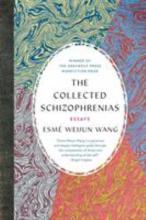
Schizophrenia is not a single unifying diagnosis, and Esmé Weijun Wang writes not just to her fellow members of the 'collected schizophrenias' but to those who wish to understand it as well. Opening with the journey toward her diagnosis of schizoaffective disorder, Wang discusses the medical community's own disagreement about labels and procedures for diagnosing those with mental illness, and then follows an arc that examines the manifestations of schizophrenia in her life.
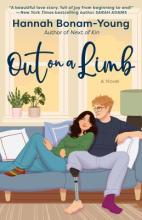
Winnifred "Win" McNulty has always been wildly independent and not one to be coddled for her limb difference. Win has spent most of her life trying to prove that she can do it all on her own. With some minor adjustments, she's done just fine. Then a one-night stand at a costume party with the incredibly charming Bo changes everything. Win finds herself pregnant--and decides to keep it. While Bo is surprisingly elated to step up to the plate, Win is unsure of whether she can handle this new challenge. Together, Win and Bo decide to get to know one another as friends and nothing more while they embark on this parenting journey together. But, as they both should know by now, life rarely goes according to plan.
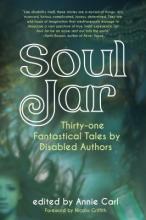
Too often, science fiction and fantasy stories erase--or cure--characters with disabilities. Soul Jar, edited by author and bookstore owner Annie Carl, features thirty-one stories by disabled authors, imagining such wonders as a shapeshifter on a first date, skin that sprouts orchid buds, and a cereal-box demon. An insulin pump diverts an undead mob. An autistic teen sets out to discover the local cranberry bog's sinister secret. A pizza delivery on Mars goes wrong. This thrillingly peculiar collection sparkles with humor, heart, and insight, all within the context of disability representation.
So Lucky is the sharp, surprising new novel by Nicola Griffith—the profoundly personal and emphatically political story of a confident woman forced to confront an unnerving new reality when in the space of a single week her wife leaves her and she is diagnosed with multiple sclerosis.
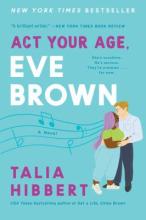
Eve Brown is a certified hot mess. No matter how hard she strives to do right, her life always goes horribly wrong--so she's given up trying. [...] Jacob Wayne is in control. Always. [...] So when a purple-haired tornado of a woman turns up out of the blue to interview for his open chef position, he tells her the brutal truth: not a chance in hell. Then she hits him with her car supposedly by accident. Yeah, right. Now his arm is broken, his B&B is understaffed, and the dangerously unpredictable Eve is fluttering around, trying to help....[T]he longer these two enemies spend in close quarters, the more their animosity turns into something else.
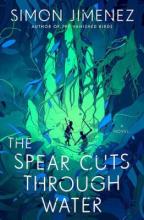
Both a sweeping adventure story and an intimate exploration of identity, legacy, and belonging, The Spear Cuts Through Water is an ambitious and profound saga that will transport and transform you—and is like nothing you’ve ever read before.
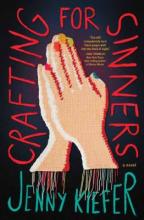
A queer woman must fight her way out of a big-box craft store run by a diabolical religious cult in this gripping survival horror novel by Jenny Kiefer, author of This Wretched Valley. The ratcheting tension and gut-churning terror will appeal to fans of The Cabin at the End of the World by Paul Tremblay and The Ritual by Adam Nevill.
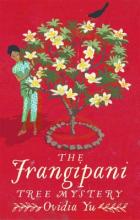
1936 in the Crown Colony of Singapore, and the British abdication crisis and rising Japanese threat seem very far away. When the Irish nanny looking after Acting Governor Palin's daughter dies suddenly - and in mysterious circumstances - mission school-educated local girl SuLin - an aspiring journalist trying to escape an arranged marriage - is invited to take her place. But then another murder at the residence occurs and it seems very likely that a killer is stalking the corridors of Government House. It now takes all SuLin's traditional skills and intelligence to help British-born Chief Inspector Thomas LeFroy solve the murders - and escape with her own life.