
Movies and documentaries picked by DPL staff, honoring Arab history and culture.
Abla runs a modest local bakery from her home in Casablanca where she lives alone with her eight-year-old daughter Warda. Their routine of housework and homework is interrupted one day by a knock on the door. It is Samia, a young woman looking for a job and a roof over her head. The little girl is immediately taken with the newcomer, but her mother initially refuses to allow a pregnant stranger into their home. Gradually, however, Abla's resolve softens and Samia's arrival begins to offer all of them the prospect of a new life.
Muna Farah, a Palestinian single mom, struggles to maintain her optimistic spirit in the daily grind of intimidating West Bank checkpoints, the constant nagging of a controlling mother, and the haunting shadows of a failed marriage. Everything changes one day when she receives a letter informing her that her family has been granted a U.S. green card.
Farah, eighteen years old, has just graduated and her family already sees her as a future doctor. She doesn't think the same way. She sings in a political rock band. She has a passion for life, gets drunk, discovers love and her city by night against the will of her mother Hayet, who knows Tunisia and its dangers too well.
A Somali billboard repairman working in Dubai decides he wants to experience some of the products advertised on his boards. An experience that begins innocently enough, but quickly spins out of control, especially when a con man enters the picture.
Mo is a practicing Muslim still reeling from heartbreak. When an All-American guy named Kal offers to join him in his nightly Iftars, the traditional meal eaten my Muslims during Ramadan, meal after meal, the two start to discover they have more in common than meets the eye.
When an old airport janitor finds a captain's hat in the trash, he gets pulled into the lives of children in his poor neighborhood. He weaves imaginary stories of his world adventures to offer hope in the face of their harsh reality.
Director Nabil Ayouch drew on his own experience opening a youth cultural center in Casablanca for this story of a former rapper named Anas who takes a job teaching hip hop in an underprivileged neighborhood. Despite differences in identity, religion, and politics, Anas encourages his students to bond together and break free from the weight of restrictive traditions in order to follow their passion and express themselves through the arts.
In the not-so-distant future, the free-spirited Badri family have escaped the toxic pollution and social unrest of Beirut by seeking refuge in an idyllic mountain home. Without warning, the government starts to build a garbage landfill right outside their fence, intruding on their domestic utopia and bringing the trash and corruption of a whole country to their doorstep. As the landfill rises, so does tension in the household, revealing a long-simmering division between those family members who wish to defend or abandon the mountain oasis they have built.
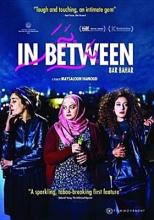
Lalia (Mouna Hawa), Salma (Sana Jammelieh), and Nur (Shaden Kanboura) share an apartment in the vibrant heart of Tel Aviv. Lalia, a criminal lawyer with a wicked wit, loves to burn off her workday stress in the underground club scene. Salma, slightly more subdued, is a DJ and bartender. Nur is a younger, religious Muslim girl who moves into the apartment in order to study at the university. Nur is both intrigued and intimidated by her two sophisticated roommates.
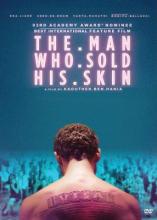
A young Syrian refugee loans his back as a canvas to a famous tattoo artist to gain freedom of movement around the world as a living work of art.
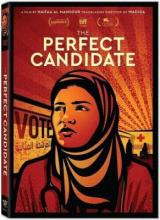
Maryam is a determined young doctor who runs for city council after the male incumbent repeatedly ignores her request to fix the muddy road leading to her clinic. Despite her father and her community's struggle to accept her as their town's first female candidate, Maryam's creative and ambitious campaign builds momentum, becoming a symbol for a larger movement.
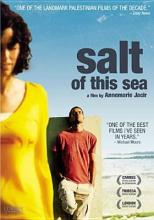
Soraya, born in Brooklyn in a working class community of Palestinian refugees, discovers that her grandfather's savings were frozen in a bank account in Jaffa when he was exiled in 1948. Direct, stubborn, and determined to reclaim what is hers, she fulfills her life-long dream of "returning" to Palestine. Slowly she is taken apart by the reality around her and is forced to confront her own anger. She meets Emad, a young Palestinian whose ambition, contrary to hers, is to leave forever. Tired of the constraints that dictate their lives, they know in order to be free, they must take things into their own hands, even if it's illegal.
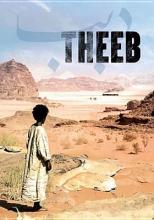
1916. While war rages in the Ottoman Empire, Hussein raises his younger brother Theeb in a traditional Bedouin community that is isolated by the vast, unforgiving desert. The brothers₂ quiet existence is suddenly interrupted when a British Army officer and his guide ask Hussein to escort them to a water well located along the old pilgrimage route to Mecca. So as not to dishonor his recently deceased father, Hussein agrees to lead them on the long and treacherous journey.
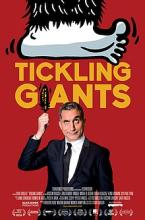
Dr. Bassem Youssef made a decision that's every mother's worst nightmare - he left his job as a heart surgeon to become a full-time comedian. Dubbed "The Egyptian Jon Stewart," Bassem creates the most viewed television program in the Middle East. He has 30 million viewers per episode, compared to The Daily Show with Jon Stewart's 2 million viewers. In a country where free speech is not settled law, Bassem comes up with creative ways to non-violently challenge abuses of power. He endures physical threats, protests, and legal action - all because of his politically charged jokes. No unicorns or falafel were harmed in the making of this film.
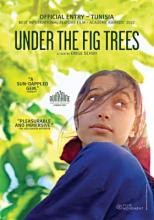
On a hot summer day, a crew of workers--men and women, young and old--arrive at dawn at a picturesque fig orchard in northwest Tunisia. We eavesdrop, through the sun-dappled leaves of the fig trees, as they joke, argue, debate, gossip, flirt, all the while painting an unhurried but riveting portrait of everyday life in the rural society, where class, gender, and circumstance often don't allow for such personal freedoms.
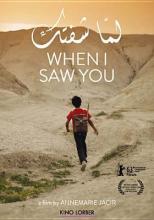
In Jordan, in 1967, tens of thousands of refugees pour across the border from Palestine. Separated from his father in the chaos of war, Tarek, eleven, and his mother Ghaydaa are placed in a temporary refugee camp, where they wait, like the generation before them in 1948. Seeking to escape the difficulties of camp life, Tarek's free spirit and curious nature lead him to a group of people on a journey that will change their lives.
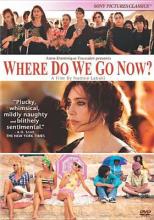
A group of Lebanese women try to ease religious tensions between Christians and Muslims in their village.
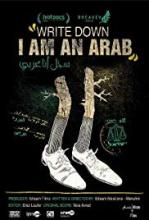
“Write Down, I am an Arab” tells the story of Mahmoud Darwish, the Palestinian national poet and one of the most influential writers of the Arab world. His writing shaped Palestinian identity and helped galvanize generations of Palestinians to their cause. Born in the Galilee, Darwish?s family fled during the 1948 Arab-Israeli War and returned a few years later to a ruined homeland. These early experiences would provide the foundation for a writing career that would come to define an entire nation.
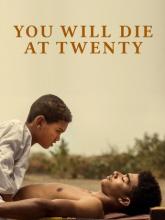
A moving meditation on what it means to live in the present, YOU WILL DIE AT TWENTY is an auspicious debut and Sudan's first Oscar submission, Shortly after his birth, the holy man of the village predicts that Muzamil will die at age 20. His father, unable to stand the curse, leaves home forcing Sakina to raise her son as an overly protective single mother. One day, Muzamil turns 19....